The Tactic
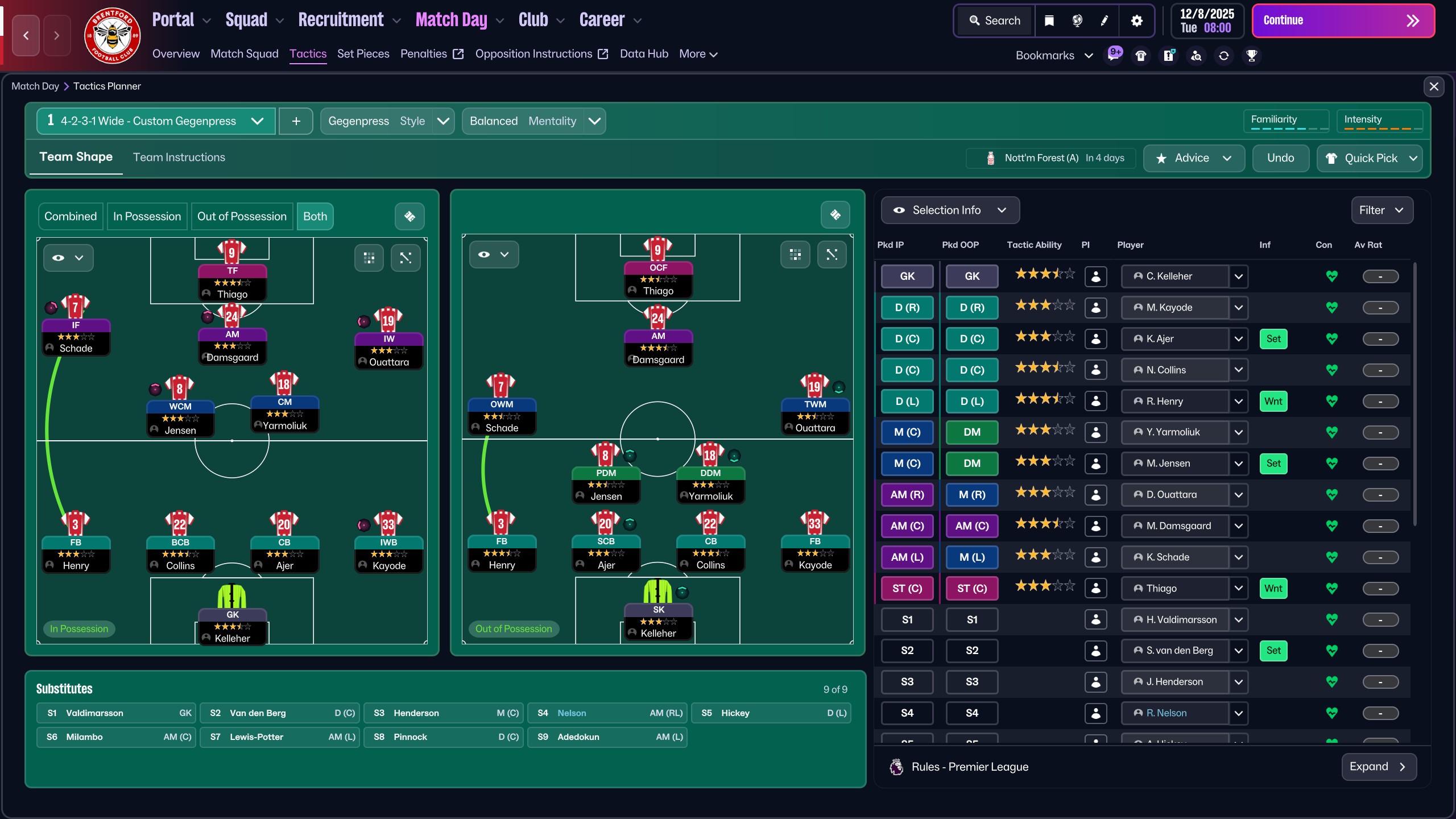
In Possession
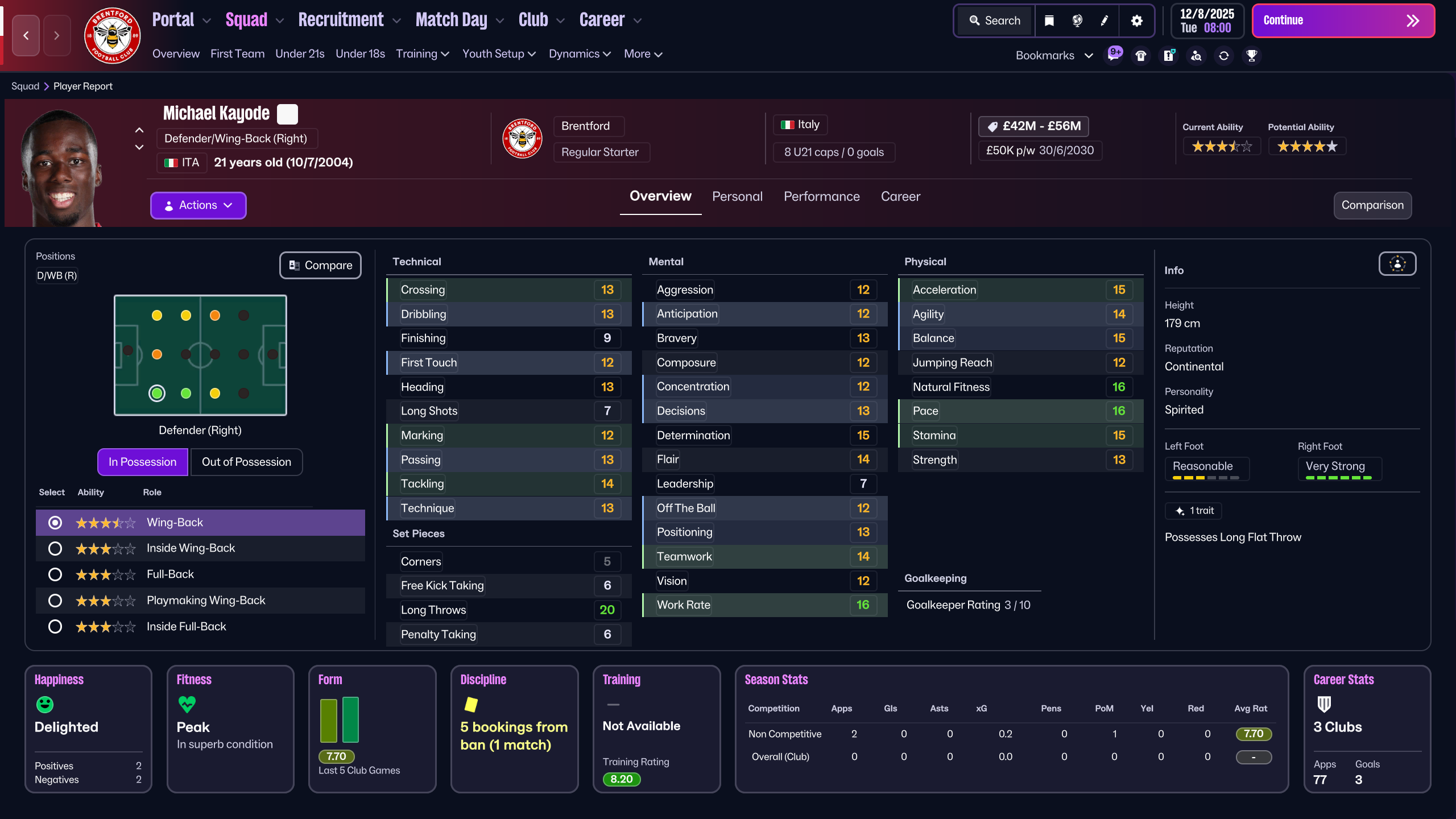
In possession, Andrews mainly deploys a 4-2-3-1 structure, which is largely built on keeping possession while looking to carve open attacks through longer, more direct balls forward. Starting from a back four, the speed and mobility of Rico Henry and Michael Kayode creates overloads wide, with both full-backs overlapping into the space vacated by Kevin Schade and Dango Ouattara drifting inside. The striker’s role is disruptive, occupying both centre-backs and creating space for runners around him.
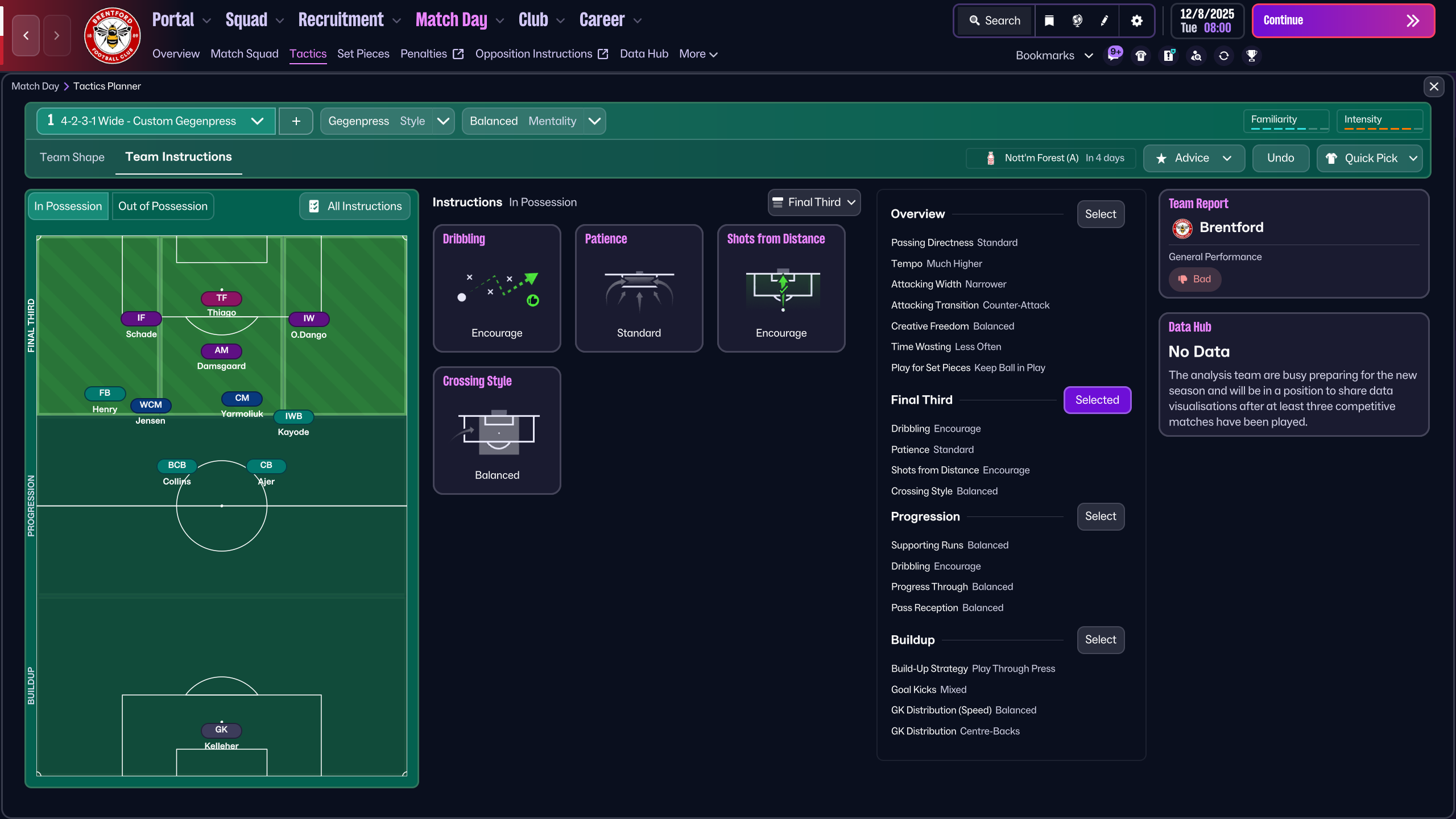
Shooting is encouraged, with Brentford among the league leaders for shots on target and shot conversion. Schade ranks in the top 5% for shooting and XG per shot this season. Andrews also puts a big emphasis on counter-attacking football, getting the ball forward at speed, particularly via the pace of Outtara and Schade on either flank or via the hold-up play in the Target Forward role. The striker is given freedom to roam into pockets of space, link play, run the channels and remain a constant penalty-box presence. Brentford also have won a high number of penalties in the Premier League so far this season, due to Andrews encouraging his attackers to run at defenders and opportunities to go one-on-one.
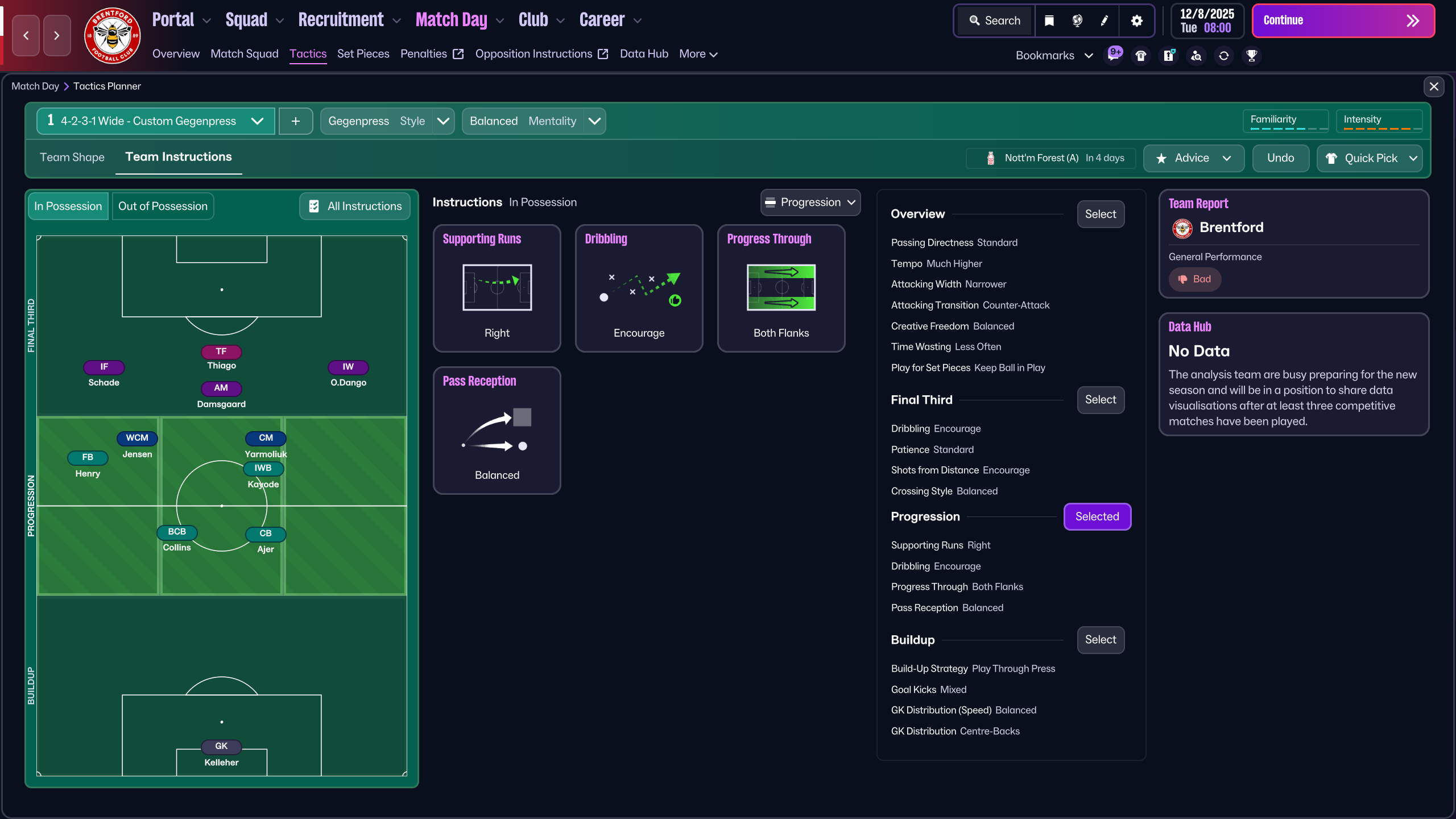
Set Pieces are a huge focus area for Brentford. This is perhaps unsurprising given Andrews previously held the role of set-piece coach before taking on his current role. Mikkel Daamsgard, Vitaly Janelt, Mathias Jensen and Outtara make up almost 50% of all Brentford’s assists this season. One of the biggest successes for The Bees this season has been the long throw ability of Kayode, the Italian’s throw-ins resulting in at least 5 goals this season. The team plays to his strengths, often favouring the right-hand flank and looking to force throw-ins and set pieces where possible.
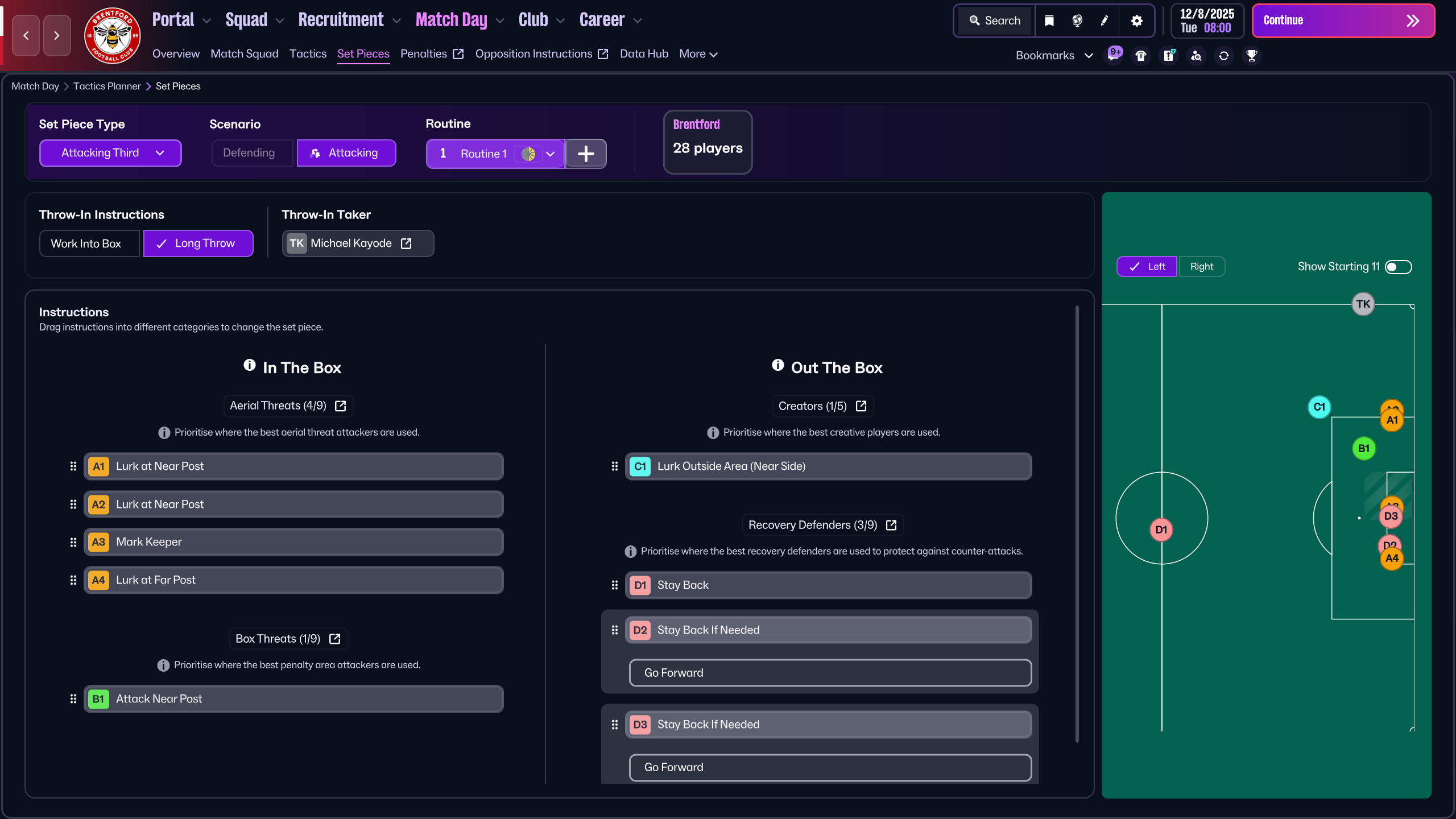
Brentford’s double pivot in midfield has been the anchor of their system. In possession, Yehor Yarmoliuk or Jordan Henderson will often look to receive the ball deep with Nathan Collins often progressing into midfield on the ball which allows for Jensen or Janelt to push higher and join attacking phases
In goal, Caoimhín Kelleher is encouraged to get involved in build-up play, ranking in Brentford’s top five players for touches of the ball this season, while similarly Collins as a ball-playing defender helps Brentford to control possession deeper and initiate attacking build-up.
Out of Possession
The 4-2-3-1 formation drops to a slightly deeper 4-4-1-1, with the midfield duo becoming a dropping pivot as they look to protect the defence and intercept counter attacks. They play with a high line in the attacking third, the entire attacking line expected to press high and defend from the front. This is illustrated by the fact that Brentford rank among the higher teams in terms of distance covered this season.
Once the ball enters their own half, we see a more traditional low block deployed. Yarmoliuk frequently drops into the back line and ranks among the league leaders for tackles made. Henry and Kayode have the recovery pace needed to track back and become full-backs in a flat back-four when defending.
`Andrews has created a robust, replicable and relatively simplistic tactical style and system at Brentford. Equally important is the fact that players have been recruited to easily slot into this system without any major disruption. In centre-backs Collins, Kristoffer Ajer, Sepp van den Berg and Ethan Pinnock, Andrews knows he can deploy almost any combination to good effect within the defensive unit without deviating from their game plan, while similarly Kayode and Henry can be easily rotated with Aaron Hickey or Keane Lewis-Potter without the structure needing to change.
As a former midfielder himself, Andrews knows that in Jensen, Yarmoliuk, Henderson and Janelt he can deploy a strong double pivot in any fixture to form the backbone of his system. Each midfielder offers enough tactical flexibility for Brentford to maintain the same structure regardless of opponent. Outtara and Schade are frequently rotated with Nelson and Lewis-Potter, while Damsgaard and Jensen are interchangeable in the hybrid eight or ten role behind the forward.
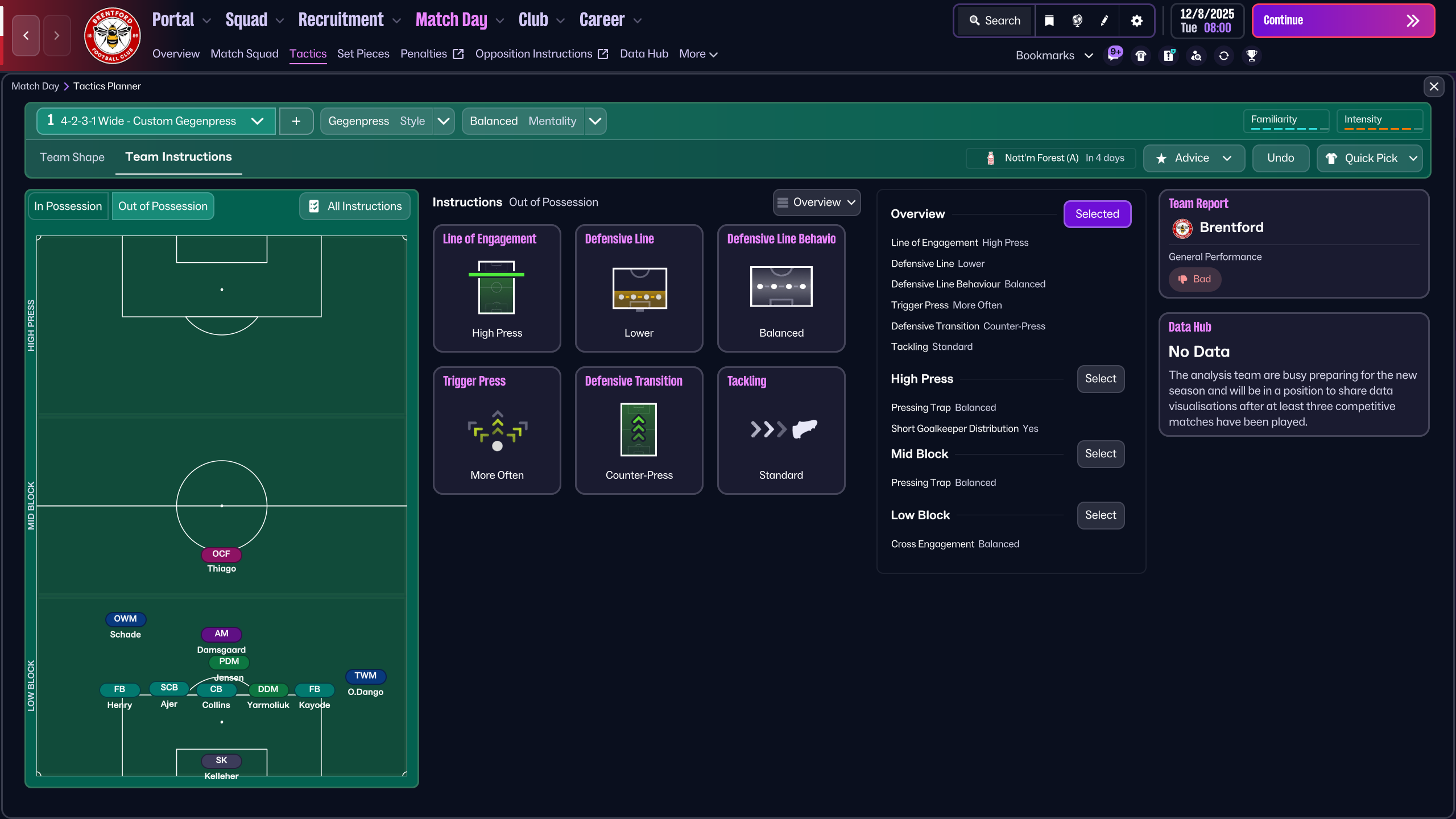
There we have it, Brentford’s tactical approach recreated in FM26. The Bees narrowly missed out on qualification for European football this season. Can you go one better and lead this talented squad to the promised land of European football? There’s only one way to find out.














Don't Miss a Moment
Be the first to know what's next by following us across social media @FootballManager. Same handle, every platform.