Unai Emery is a manager of Basque heritage who has brought that unique Basque-style pragmatism to the Premier League. Basque football and its emphasis on structure and control has long been a tactical influence for Ihor.
So what is Emery's favoured tactic at Villa and how can it be recreated in FM26?
Emery is a big proponent of structured defensive systems when out of possession that blend into more fluid, versatile, and often narrow systems in possession (in attack). A more defensively responsible version of Vertical Tiki-Taka is probably the closest FM comparison to Emery’s style. Emery’s team enjoys a fair bit of central play and possession, but there is no possession for the sake of possession.
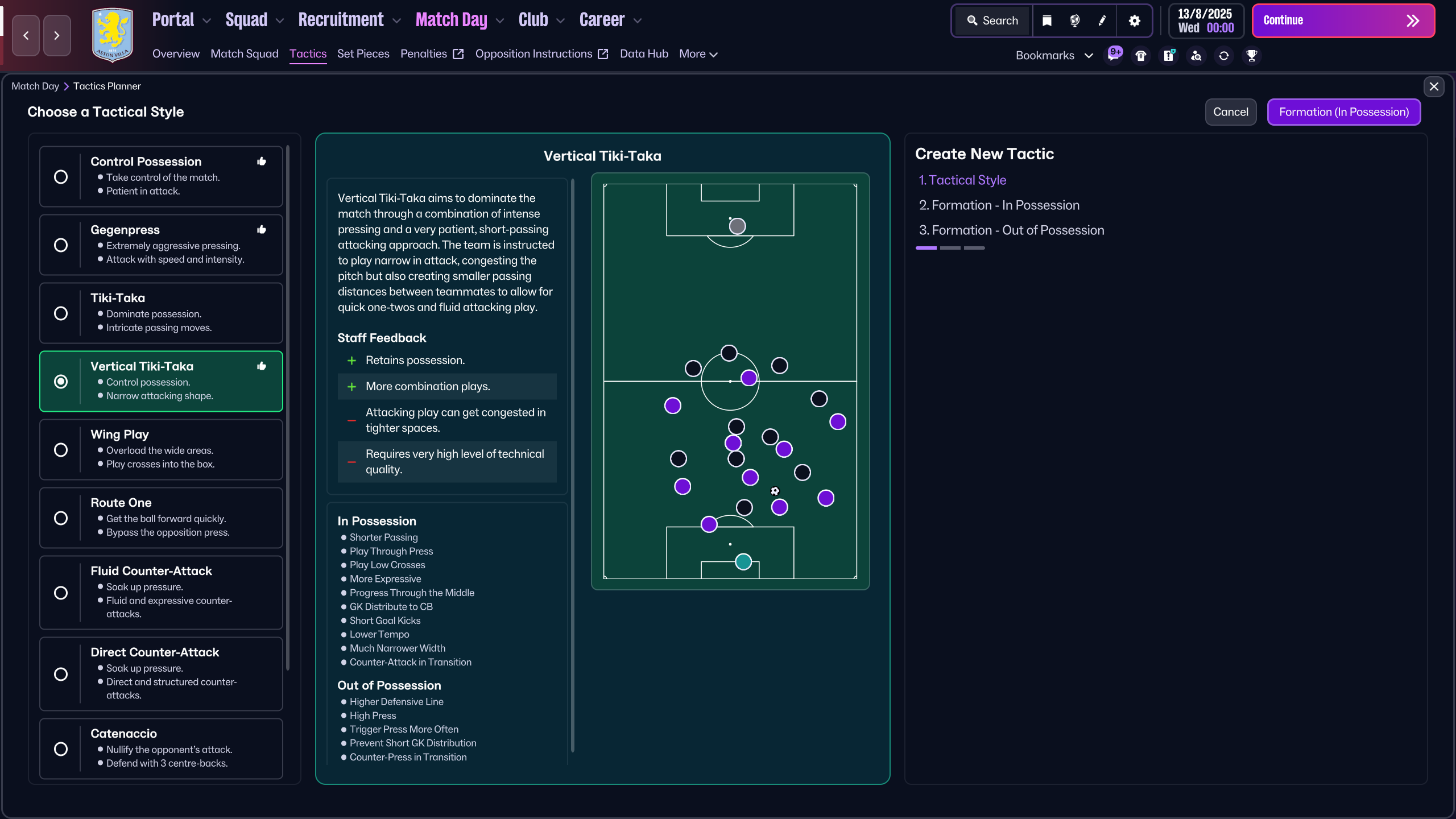 As a good starting point to build your Villa tactic, you can actually use the game's Vertical Tiki Taka preset for both in-possession and out-of-possession instructions. The game even recommends this particular tactical preset as a good starting tactical style for Villa. Only a few tweaks are needed to turn the preset into something closely resembling Emery’s defence-first system at Villa.
In possession, Villa operate in a defensively minded 4-2-3-1. Without the ball, they settle into a far more rigid 4-4-2 built around two compact banks of four. In the game, this can be recreated like this.
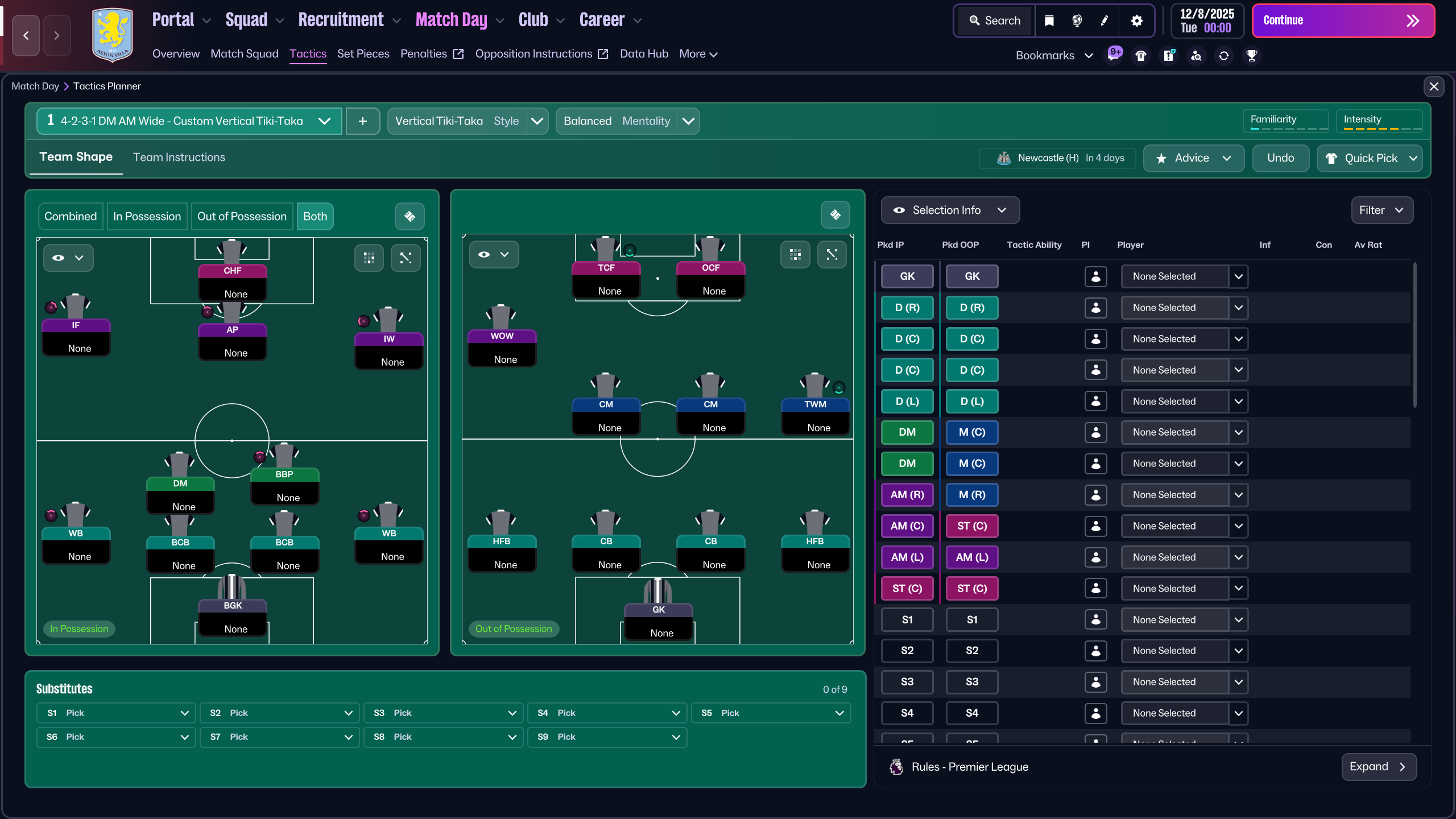 The beauty of the IP/OOP tactical system in FM26 is that you can define exactly how you want your team to play in attack (in possession) and in defence (out of possession). And sometimes this might involve fusing a more fluid, "adventurous" shape like 4-3-2-1 in attack with a more conservatively rigid shape like 4-4-2 in defence without sacrificing attacking threat or defensive structure. In other words, a bit like Emery in real life, you can go all out while attacking and launching lethal counters but then park the bus and become very structured in defence.
Attack in 4-2-3-1
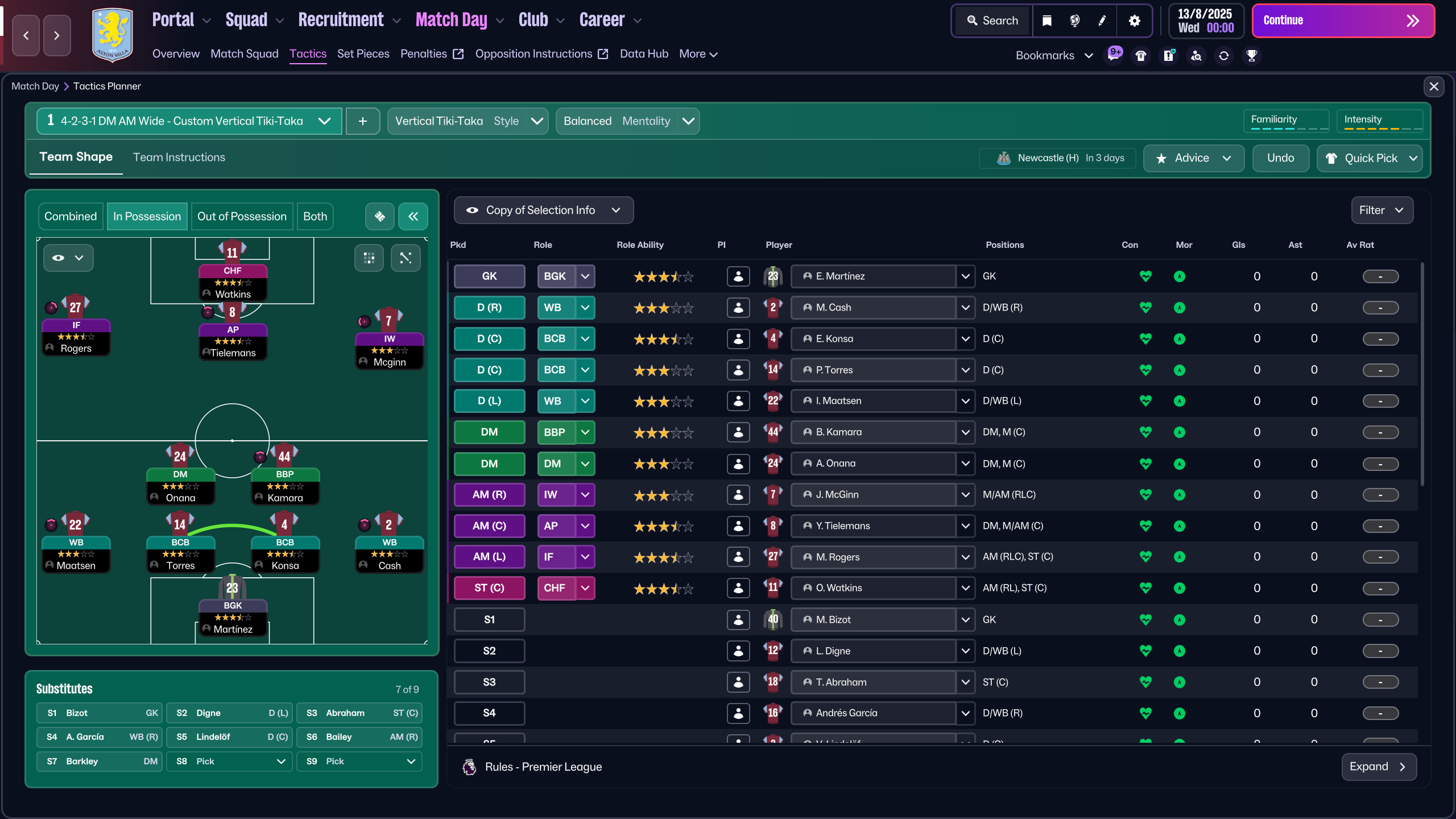 Villa's 4-2-3-1 tactic relies on quick vertical transitions through the central areas, with wide players like Morgan Rogers and John McGinn favouring cutting in onto their opposite foot.
A typical attacking play might involve the wingers coming inside while the lone striker, often Ollie Watkins, can drift into wide channels to exploit the gaps created by Villa’s inward-moving wide players.
The new Channel Forward role is perfectly suited to Watkins' skill-set.
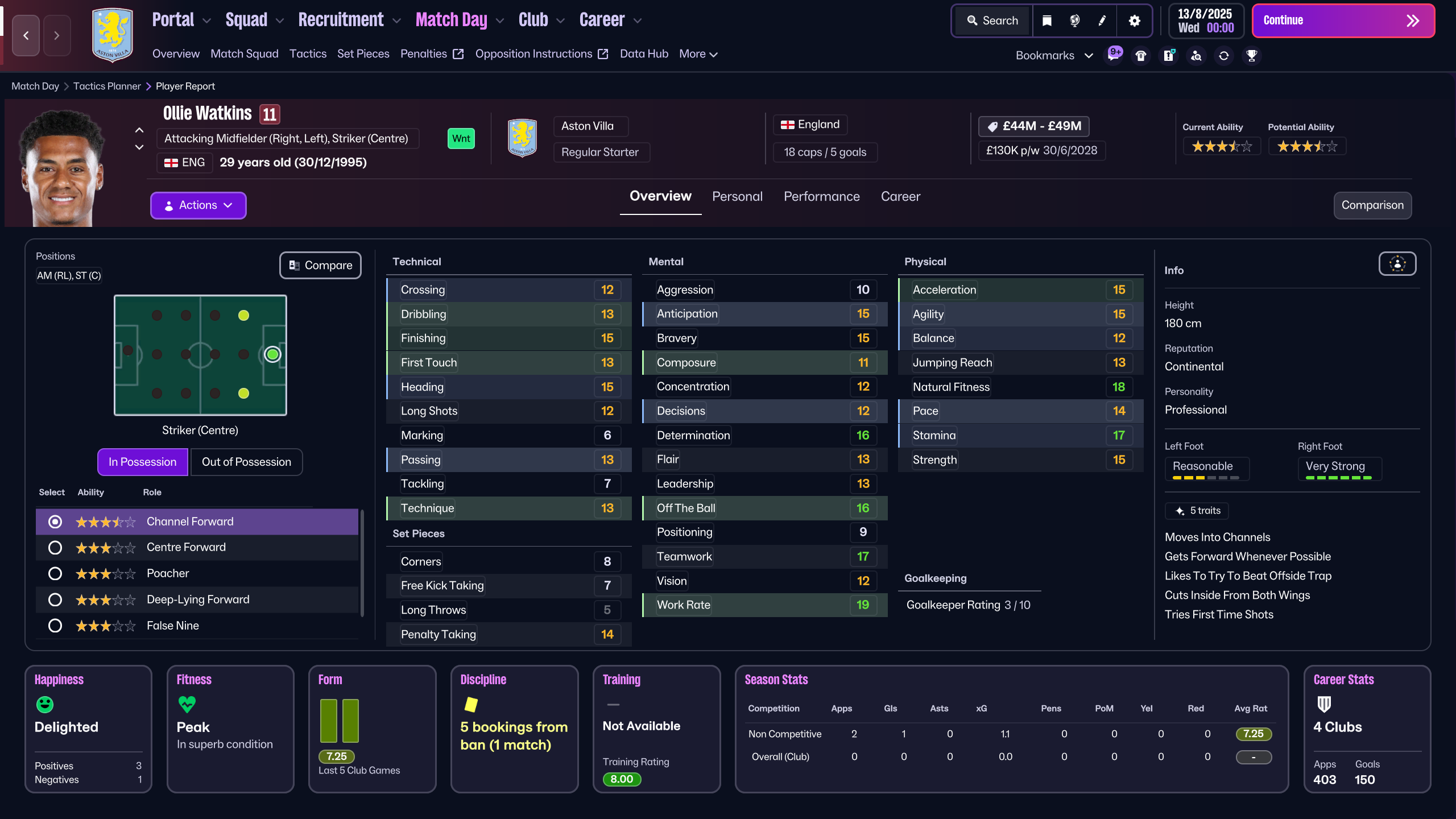 With Youri Tielemans frequently operating in the Attacking Midfielder slot, this should lead to some nice interplays between the four attackers, as well as vertical transitions on the break. The front four combine in tight spaces to create passing triangles and quick one-twos that drive Villa forward through central areas. Using your standard Vertical Tiki-Taka instructions makes a lot of sense here. They should emphasise even more the hard-coded behaviour of the roles that cut inside and play through the middle.
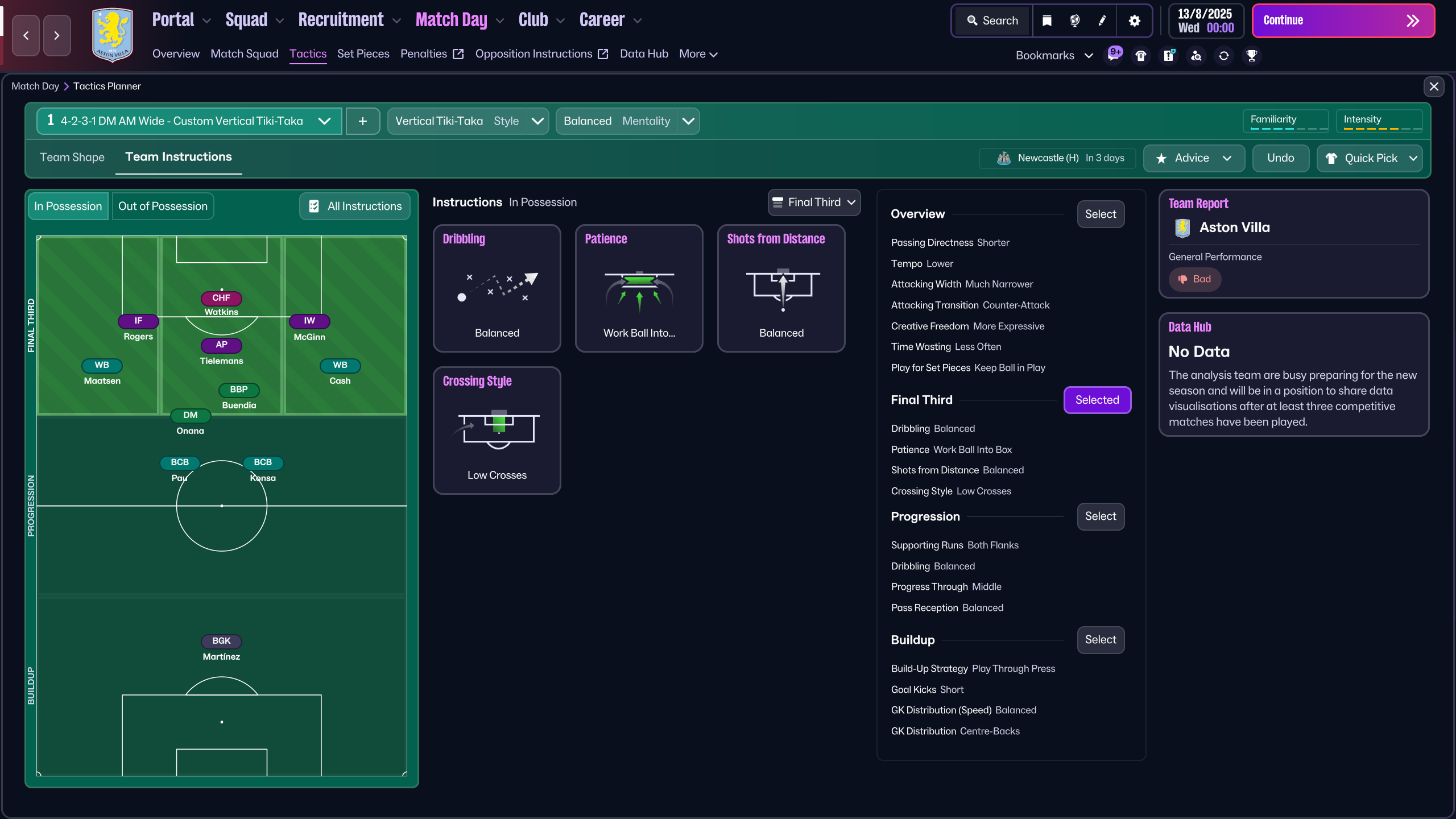 The trio of Boubacar Kamara, Amadou Onana and Tielemans make up one of the most complete midfield units in any Premier League side. You also have the hard-working forwards and wide players like Rogers and McGinn at your disposal. There is also plenty of talent in the overlapping fullback department where veteran Matty Cash and the rising star Ian Maatsen are your best options. Choosing them both in the Wingback role should lead to some nice overlaps and stretch the opposition defence (already busy dealing with Villa's overloaded midfield) even wider open.
Defend in a 4-4-2
Villa’s defensive structure sits at the heart of Emery’s tactical approach. When the ball is lost, the team forms into a very structured two banks of four. The team becomes even more organised in this defensive shape and even harder for the opposition to break down as Emery's players use the 4-4-2 shape to shut down the space through the centre of the pitch.
In the game, you can recreate this with a slightly asymmetric 4-4-2, which nevertheless defends as a true 4-4-2 with its iconic two banks of four.
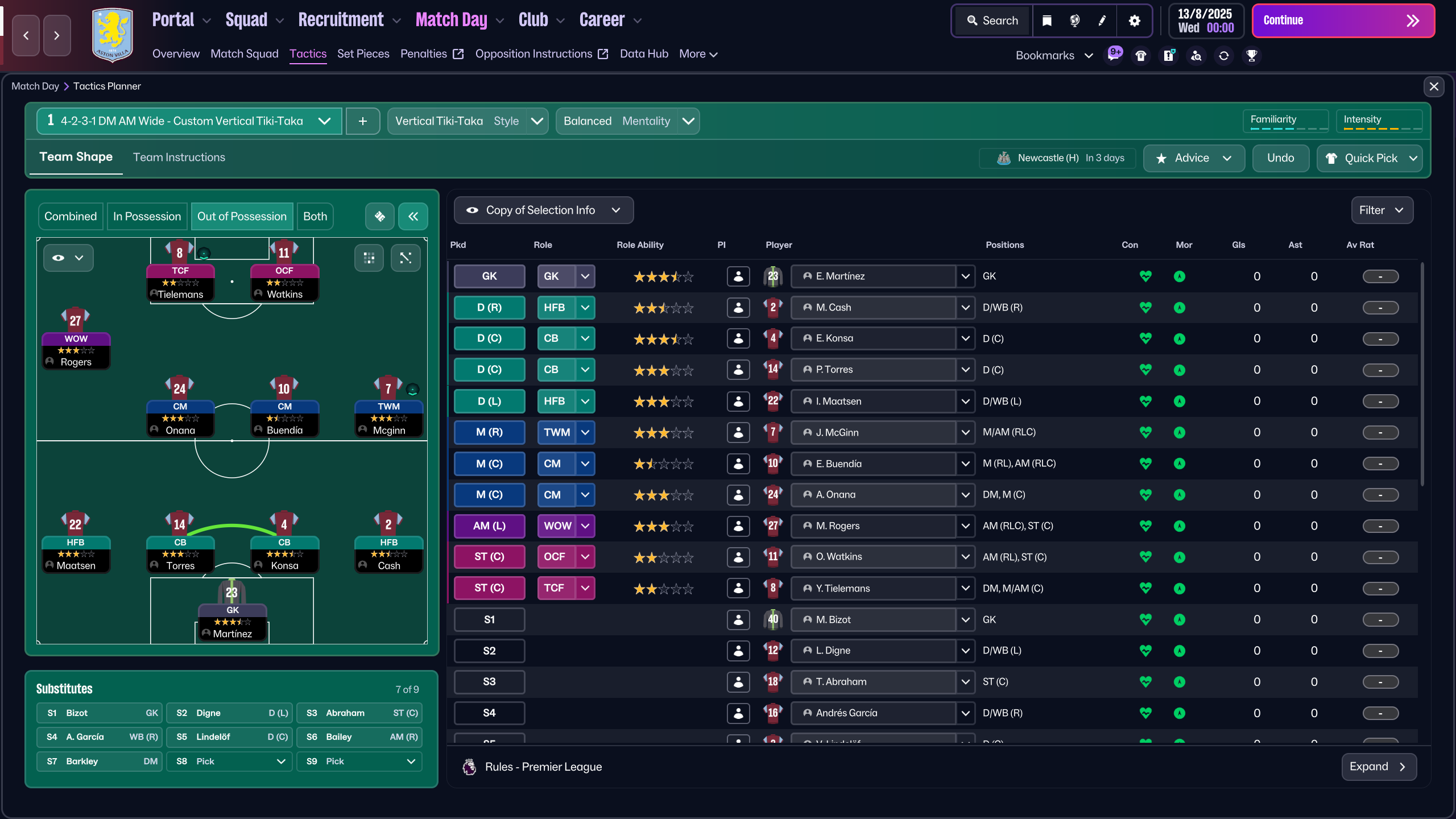 The OOP shape also lends itself well to letting a team counter-attack without throwing too many players forward (and leaving themselves open at the back). When Emery's men win the ball back in their often-used Mid-block press, they are well-set up to find either Watkins (Central Outlet Centre Forward) or Rogers (Wide Outlet Winger) as readily available outlets for the counter-attack. At the same time Tielemans and McGinn can track back to help the midfield with defence (and maintain the integrity of the two banks of four).
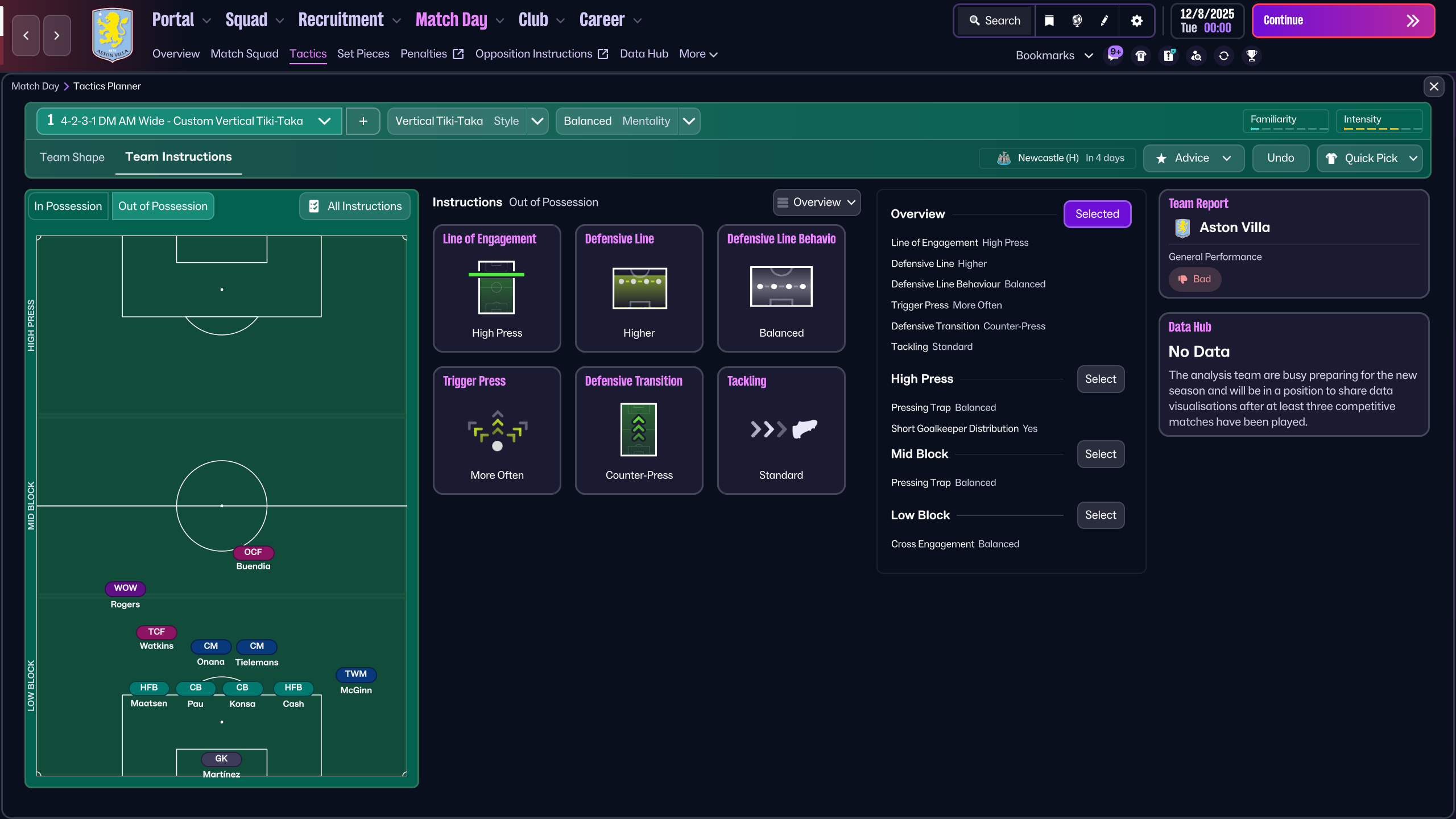 Despite their plethora of hard-working players, Aston Villa are not your typical Gegenpressing side and that is not how Emery wants his defence to function. He prefers them to remain compact within their 4-4-2 structure, keeping pace with and adjusting to the opposition until they can win the ball back at the best moment possible. Emery instead prioritises compactness and positional discipline over aggressive pressing high up the pitch.
Thanks to the team's defensive compact structure, the Villains are difficult to break down, even by the league’s best attacking sides. When faced with Emery's tenacious side, opponents are often funneled into Villa's outside trap and forced to play through the wide areas of the pitch and rely more on low-risk crosses for their ball delivery. Alternatively, they attempt quick switches of play, a risky manoeuvre against a side as positionally organised as Villa.
And that is how to embrace Basque-style football, so why not try and create your own Premier League underdog story in your next FM26 save? Happy managing!














Don't Miss a Moment
Be the first to know what's next by following us across social media @FootballManager. Same handle, every platform.