Role Models
What is the player archetype that's a good fit for Target Forward role?
When I think of a stereotypical Target Forward, someone very tall invariably comes to mind. This is best represented in FM26 via the Jumping Reach Attribute. Naturally, the taller the player, the higher he or she can jump up vertically. In a Target Forward role this is essential as it ties with the main function of this striker role to serve as a focal point for your attack.
Your typical Target Forward is not all about Jumping Reach, though. This role is no one-trick pony. Rather it's a hybrid offensive role that can excel at both direct attacks and link-up support play.
The Target Forward in FM26 is a specialised, physical striker role designed to spearhead your attacking line, hold up the ball, and dominate in the air to support teammates. In this multifaceted capacity, the striker can serve as a central focal point for direct play, pinning defenders and creating space for Wingers, Inside Forwards or Attacking Midfielders. In FM26, this role is especially effective for holding up play and providing lay-offs.
With its historical tradition of high-intensity, physical football, the Premier League tends to have a propensity for strong Target Forward strikers. For instance, let’s look at Tammy Abraham at Aston Villa. A recent returnee to the Premier League and a very good Target Forward.
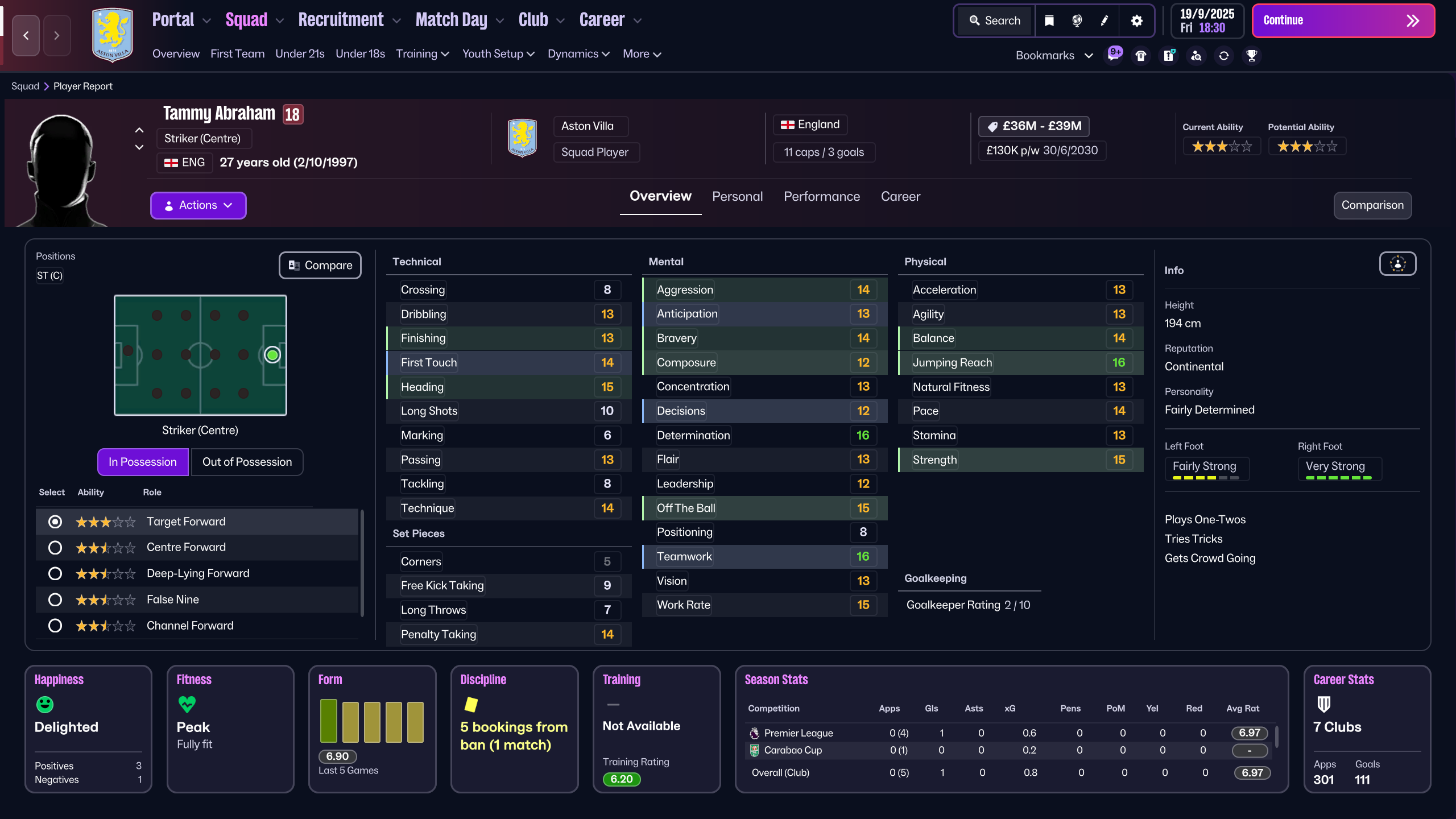
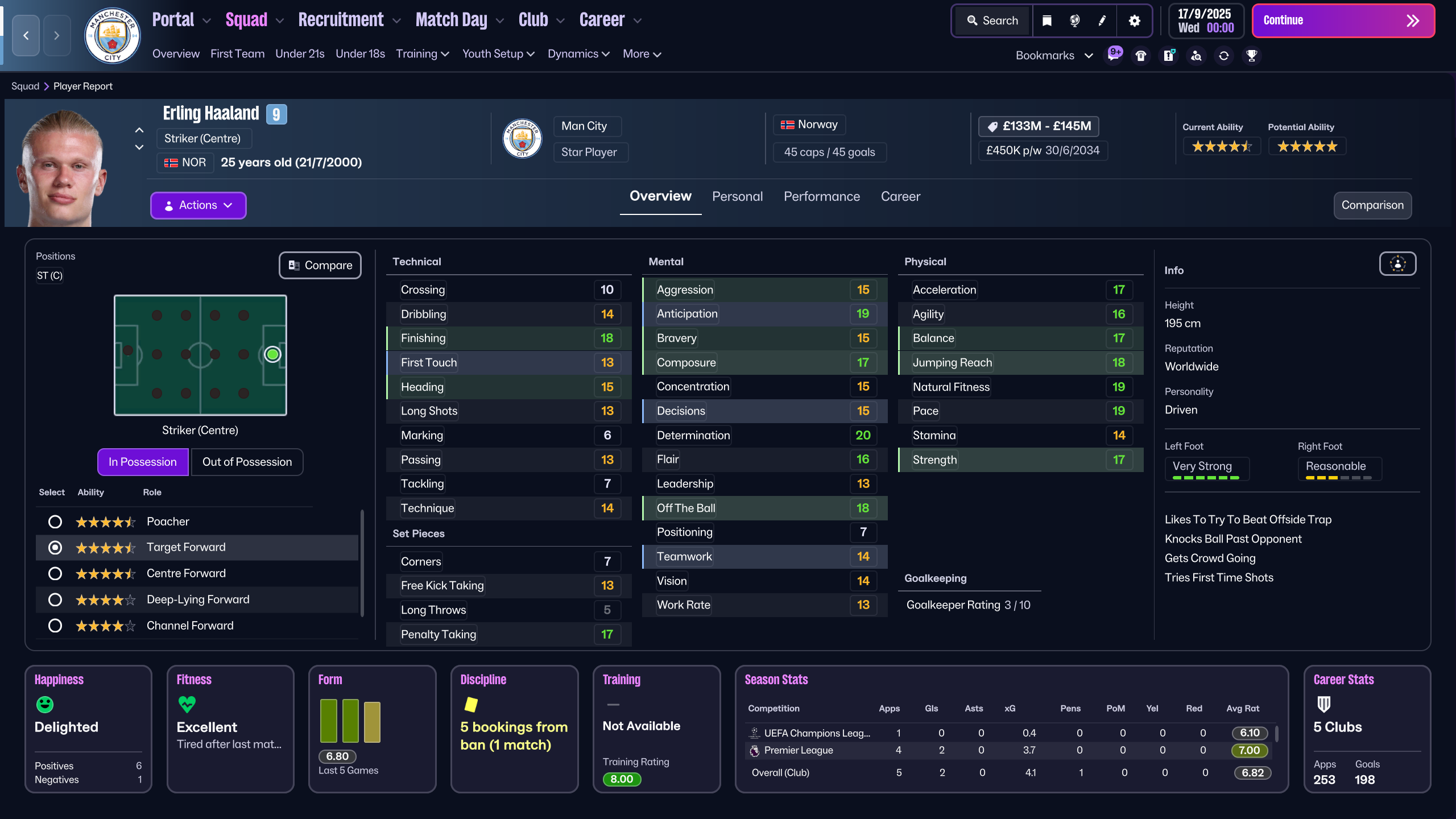
Abraham possesses a combination of above-average Finishing, First Touch and Heading. In-game, these three attributes help him to perform both the supporting and attacking aspects of his role.
In addition to Technical Attributes, a few strong Mental Attributes are recommended. Primarily, the trifecta of Aggression, Bravery and Composure will ensure that the striker can go head-to-head against the strongest, toughest opposition central defenders and win those essential aerial contests. On the Physical side, it then makes perfect sense for the Target Forward to possess above-average Jumping Reach, Strength and Balance.
Tactical Tinkering
No role plays in isolation. Indeed, for any player role to be effective in FM26 it needs to naturally connect with your formation, the other roles you’ve selected, and the tactical instructions chosen. This is particularly true for a more specialised role like the Target Forward.
Firstly, let’s look what happens if your team has at least two quality players to fill the striker position. Perhaps including someone who can fulfil another striker role that could play well in tandem with your Target Forward.
At Aston Villa, the newly-acquired Abraham has what it takes to perform in an effective partnership with Ollie Watkins. Watkins, who combines good speed with strong technical skills and Work Rate, is a perfect Channel Forward. This means that he is in a role that’s ideally suited to work off lay-offs and passes from Abraham.
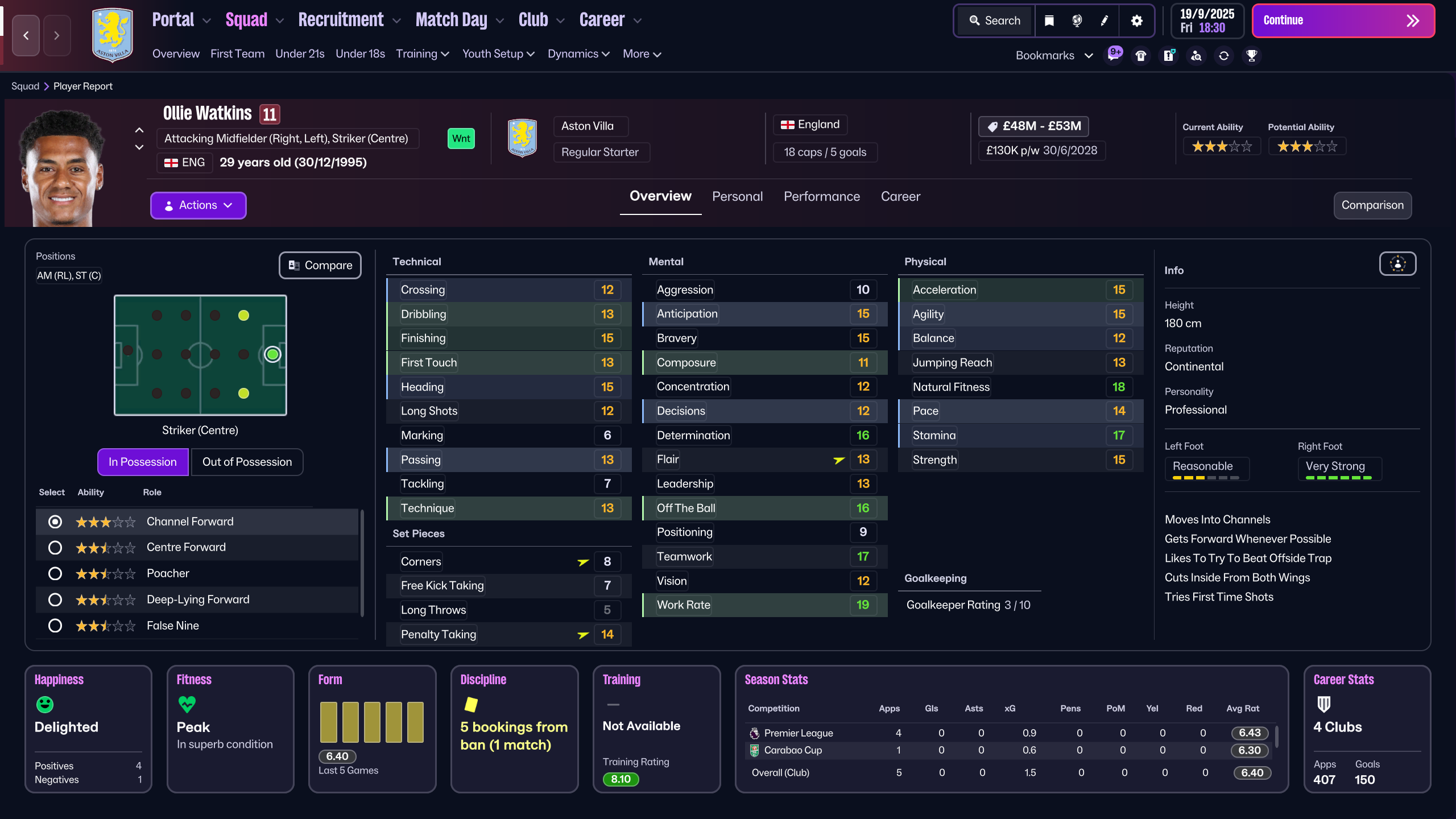
With those two in place, you need to decide on your tactical style and the rest of your formation to complement the pairing at the top of your attack
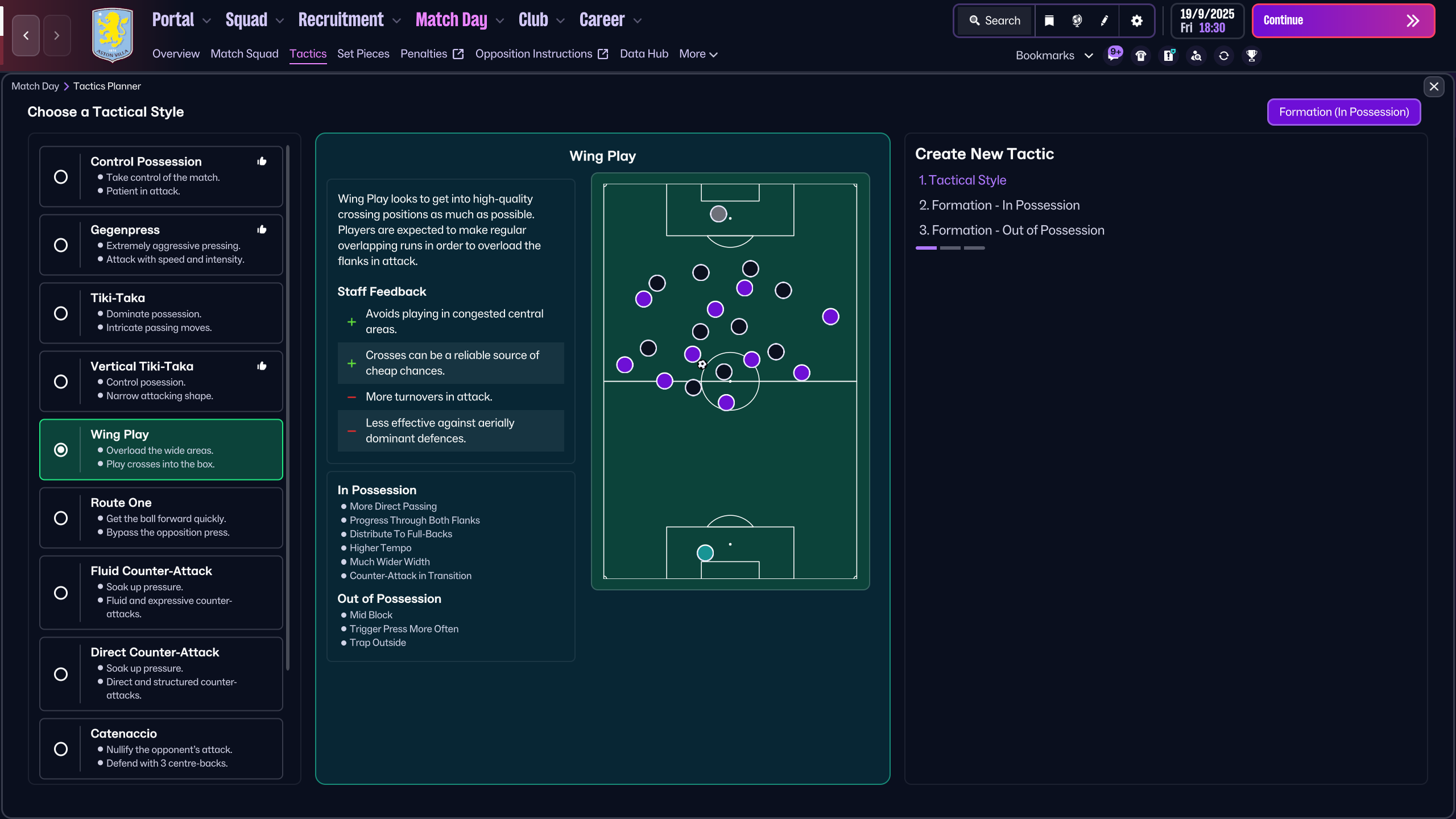
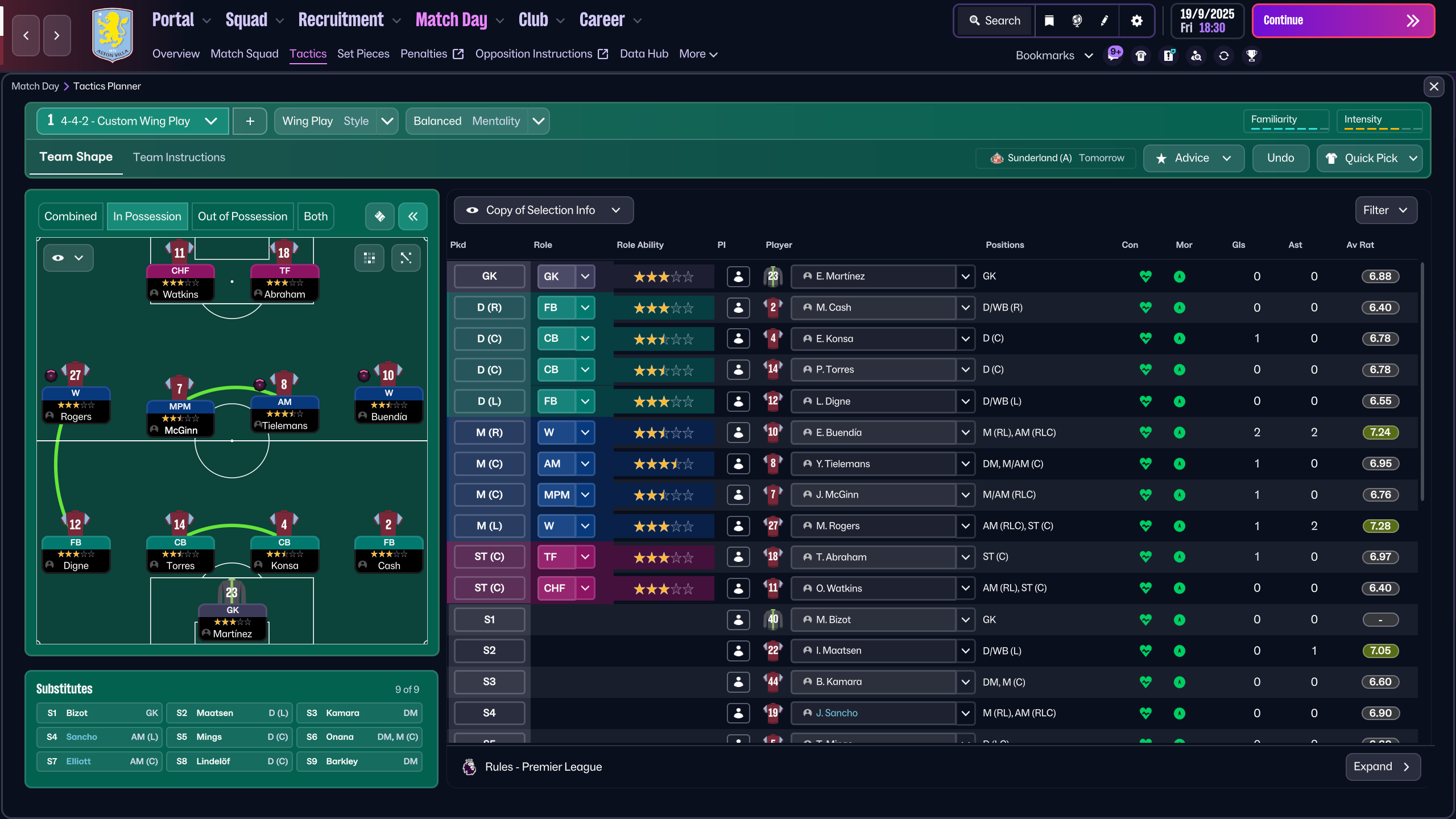
Without getting too deep into tactical tinkering, the Wing Play preset style is perfectly suitable for providing default instructions for any formation featuring a Target Forward. Essentially, it is a well-balanced tactical style on which you can rely to provide quality crosses to your strikers. Unsurprisingly, this style pairs very well with a traditional 4-4-2 and this is one of the formations suggested by the game when picking Wing Play. Aside from making sure that your players fit their best roles, very little tactical tweaking is needed from the manager.
In the formation below, the roles are finely balanced whereby the striker duo of Target Forward and Channel Forward not only compliment their Attributes very well but also get great support from the Winger, Wingback and Deep-Lying Playmaker. Besides the obvious two goal outlets upfront, there is also the attacking threat from the Inside Forward Morgan Rogers on the left-hand side.
Depending on your team, a single striker variation of Target Forward tactic might be more appealing. In this regard, a classic 4-3-3 is actually one of the strongest Target Forward-focused formations in FM26.
Not only does it provide more defensive coverage due to the extra midfielder in the defensive midfield position, but when your team loses possession, it inherently involves more players in the attacking phase.
As you can see in the formation and the role set-up pictured below, the potential goal threats can come from multiple positions. In this 4-3-3 shape, the Striker, Wide Forward, Attacking Midfielder and Winger can all add variety and unpredictability to your attacking play. Even the simplest plays could progress into a rather dangerous, to most opposition, four-pronged attack.
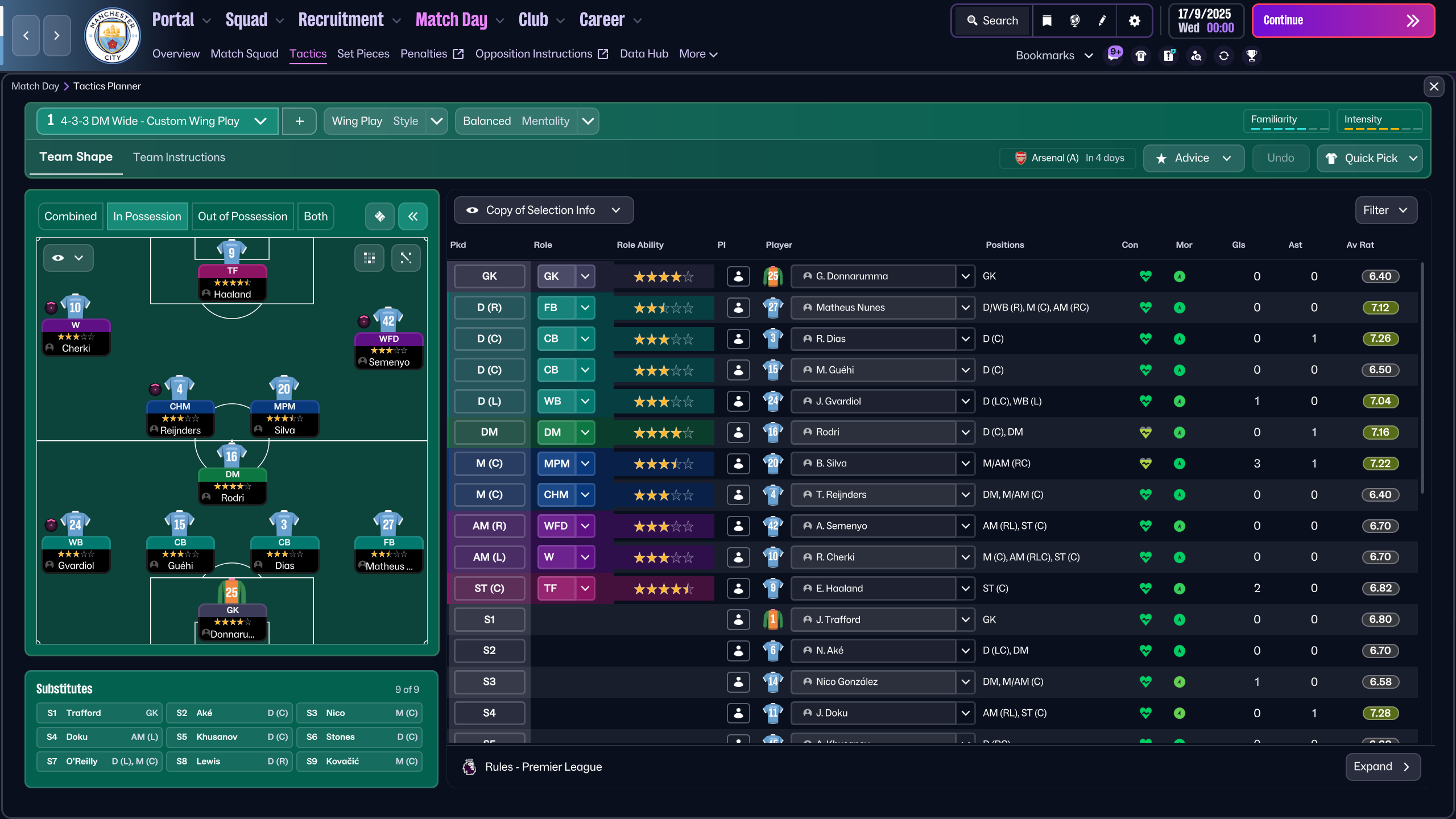
The 4-3-3 formation is well suited to teams where the Target Forward striker is one of their star players. Take Manchester City for example, who have lots of quality at full-back, out wide and then have some like Erling Haaland up front who possesses all the Attributes to be an effective Target Forward.
Experiment with different formations and roles in FM26 because the more you do, the more you’ll come to learn about your players and what gets the best from them. Happy managing!













Don't Miss a Moment
Be the first to know what's next by following us across social media @FootballManager. Same handle, every platform.