







Join the Squad Get Rewarded
Unlock early access to FM feature drops, news and reveals before anybody else. Plus, behind-the-scenes insights and incredible members-only giveaways.
Sign for FMFCAlready a member?

We’ve detected that your browser is in English, click the button below to go to the dedicated English version of the Football Manager website.
Go to English site
Hemos detectado que tu navegador está en español. Haz clic en el botón de abajo para ir a la versión del sitio web de Football Manager en este idioma.
Ir al sitio web en español
Nous avons détecté que votre navigateur est en français, cliquez sur le bouton ci-dessous pour vous rendre sur la version en français du site internet de Football Manager.
Allez vers le site en français
Tarayıcınızın dilinin Türkçe olduğunu belirledik. Football Manager web sitesinin Türkçe versiyonuna gitmek için aşağıdaki düğmeye tıklayın.
Türkçe sitemize gidin
Abbiamo rilevato che il tuo browser è in italiano, clicca sul pulsante qui sotto per andare alla versione italiana del sito di Football Manager.
Vai al sito italiano
Wir haben erkannt, dass Ihr Browser auf Deutsch eingestellt ist. Klicken Sie auf die untere Schaltfläche, um zur deutschen Football Manager-Seite zu gelangen.
Zur deutschen SeiteAdd to wishlist now to get launch alerts straight to your inbox.
In modern football, the game often turns in the instant possession changes hands. That moment of chaos, the split-second between winning the ball and deciding what to do next, is where Rest Attack lives.
When you drop back, how are you setting yourself up to win the ball back?
Here, Guido Merry explores how to master your Rest Attack in Football Manager 26.

Let’s start with a definition. Think of Rest Attack as a concept that is all about your attacking players making the most of their time without the ball. While your defenders and midfielders adapt to the opposition’s build-up play, your attackers are finding space and adjusting their positioning for overlaps and one-on-ones so that when the ball breaks, they’re poised to capitalise.
In FM26, thanks to the introduction of distinct In and Out of Possession formations, you have greater control over how your Rest Attack is structured than in previous editions.
In tactical terms, Rest Attack is set by using the Out Of Possession screen, which is the structure your team holds while the opposition has possession of the ball. When you are looking at that screen, keep in mind that it’s not just about defending; you should also consider how to attack early. Players near the ball do the hard work: harassing, pressing, forcing errors. You also want to consider keeping players forward to act as outlets for when the ball is won. That is Rest Attack.
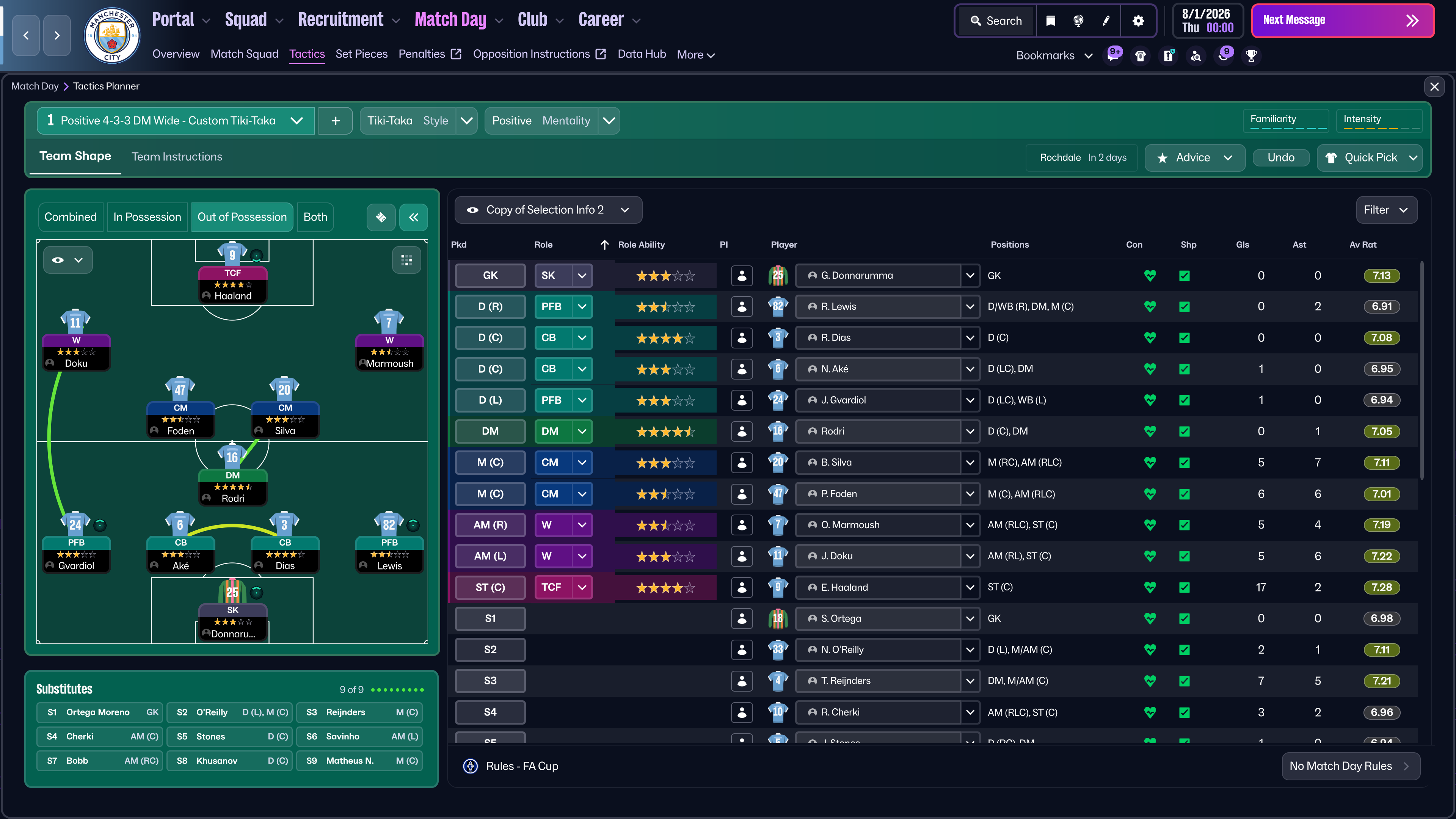
The new dual formation system separates what happens when you have the ball from what happens when you don’t. You can set up a compact, disciplined block that knows exactly where to stand when the opponent starts their attack, yet the same players can immediately morph into something much more expansive once you regain possession.
Additionally, with the introduction of dual formations comes the introduction of dual player roles.
In terms of Rest Attack, you can designate attacking midfield and wide attacking players to serve as Outlets. These are players who will stay forward and try to find space or get into one-on-ones with the remaining opposing defenders. Similarly, you can also task these players to track back, depending on the circumstances of the match.
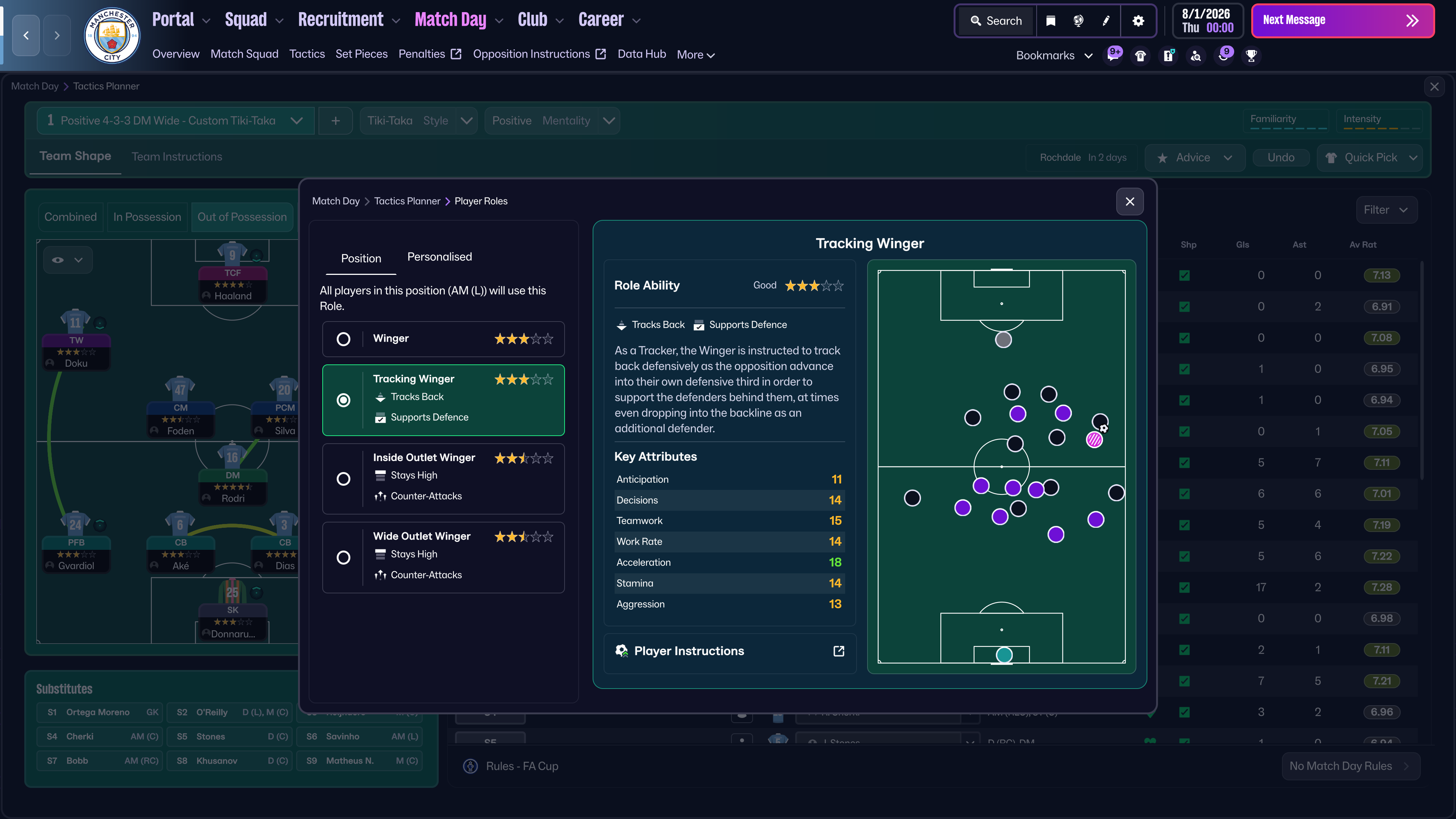
What’s really helpful is the Tactics Visualiser. This allows you to clearly see how your players occupy certain areas of the pitch within a Defensive or Attacking shape.
The visualiser divides the pitch into three vertical and three horizontal zones and lets you watch, section by section, how each player shifts as possession changes.
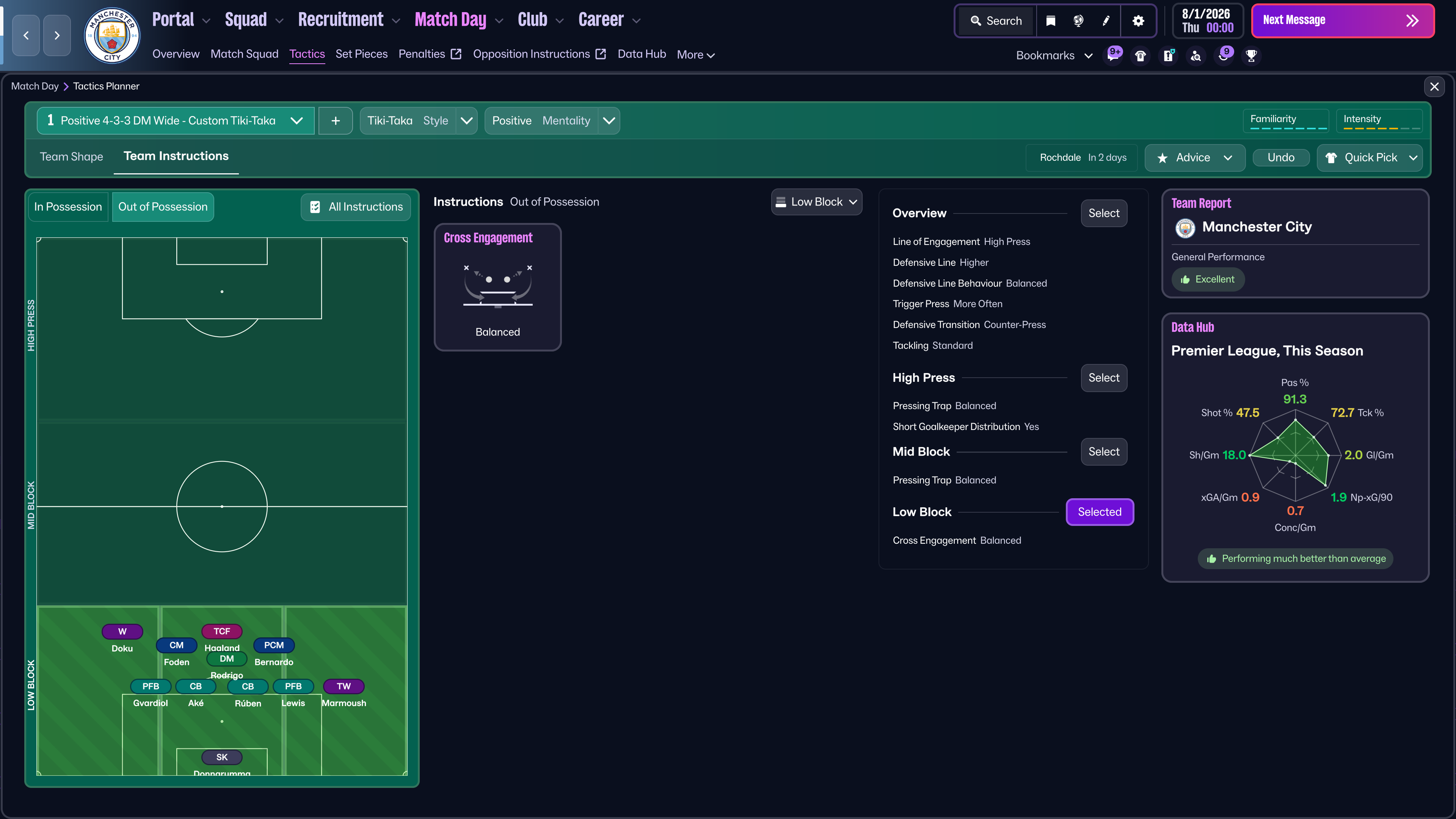
You can even see the difference between a player who tracks back and one who does not. In the below example, the left winger is set to track back and the right winger to stay forward. Depending on the opposition and which player you are fielding, you can select the right role for the right circumstance.
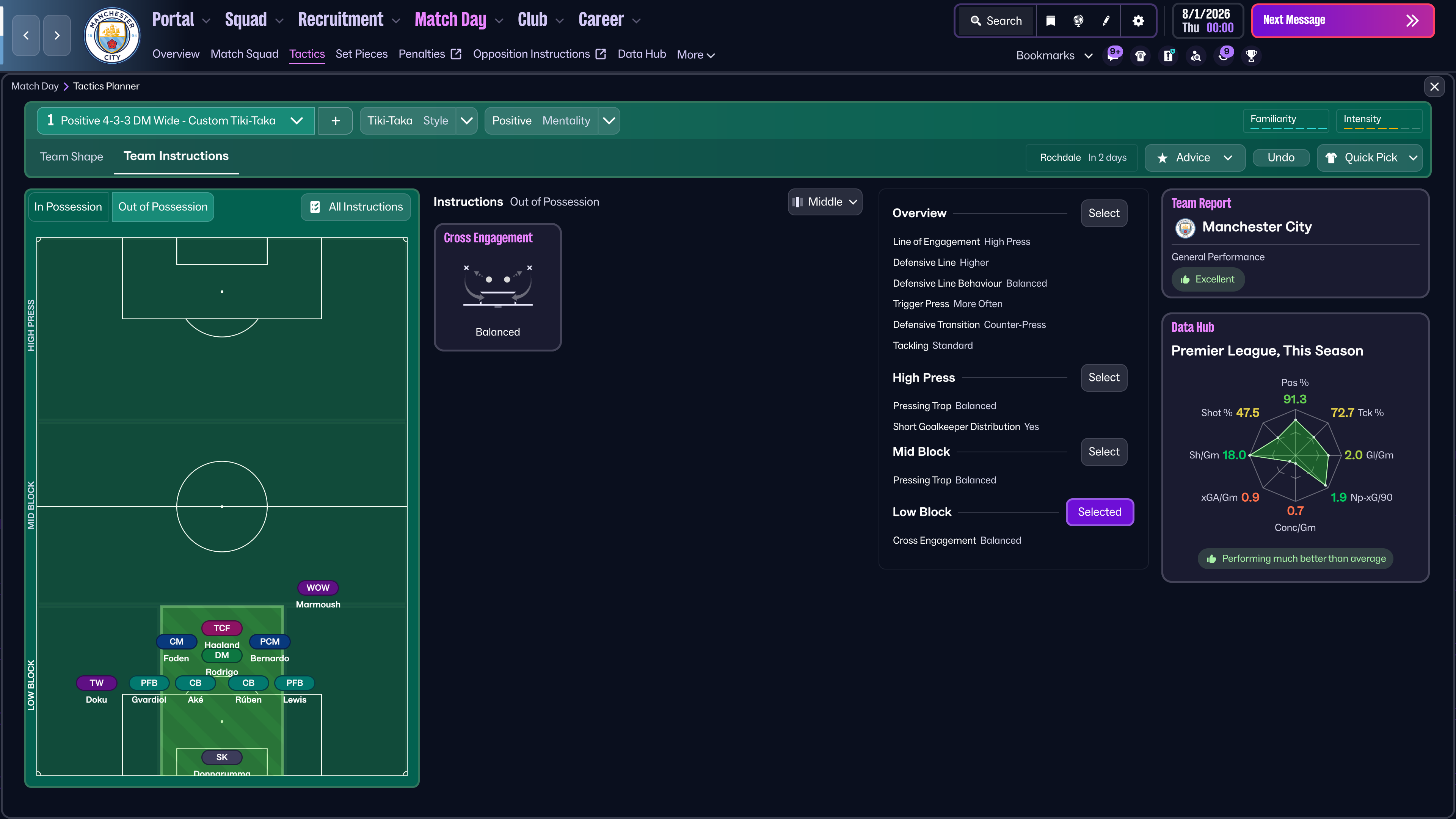
This allows you to spot gaps or obstructions in your build-up play immediately, rather than being caught out as a game unfolds. It means you can plan, adjust and perfect – all before the first whistle is blown.
FM26 makes Rest Attack easier to build by giving you unprecedented control and the ability to plan ahead. You can build your defensive shape into a wall of calm defiance, and then flip a switch to unleash a clinical counter-attack.
To truly appreciate Rest Attack, you need to understand why it matters. Transitions, those frantic seconds after possession changes, are where matches are often won or lost.
When you build your FM26 setup, you want to think ahead about how to tackle certain challenges. Dual formations let you define your Out of Possession shape separately from your In Possession one, meaning you can now position players explicitly for the counter even while defending. Want your Wide Forward lurking behind the opponent’s advanced full-back, ready to spring? You can do that with the right player role (Wide Outlet Winger) and tweak their Player Instructions.
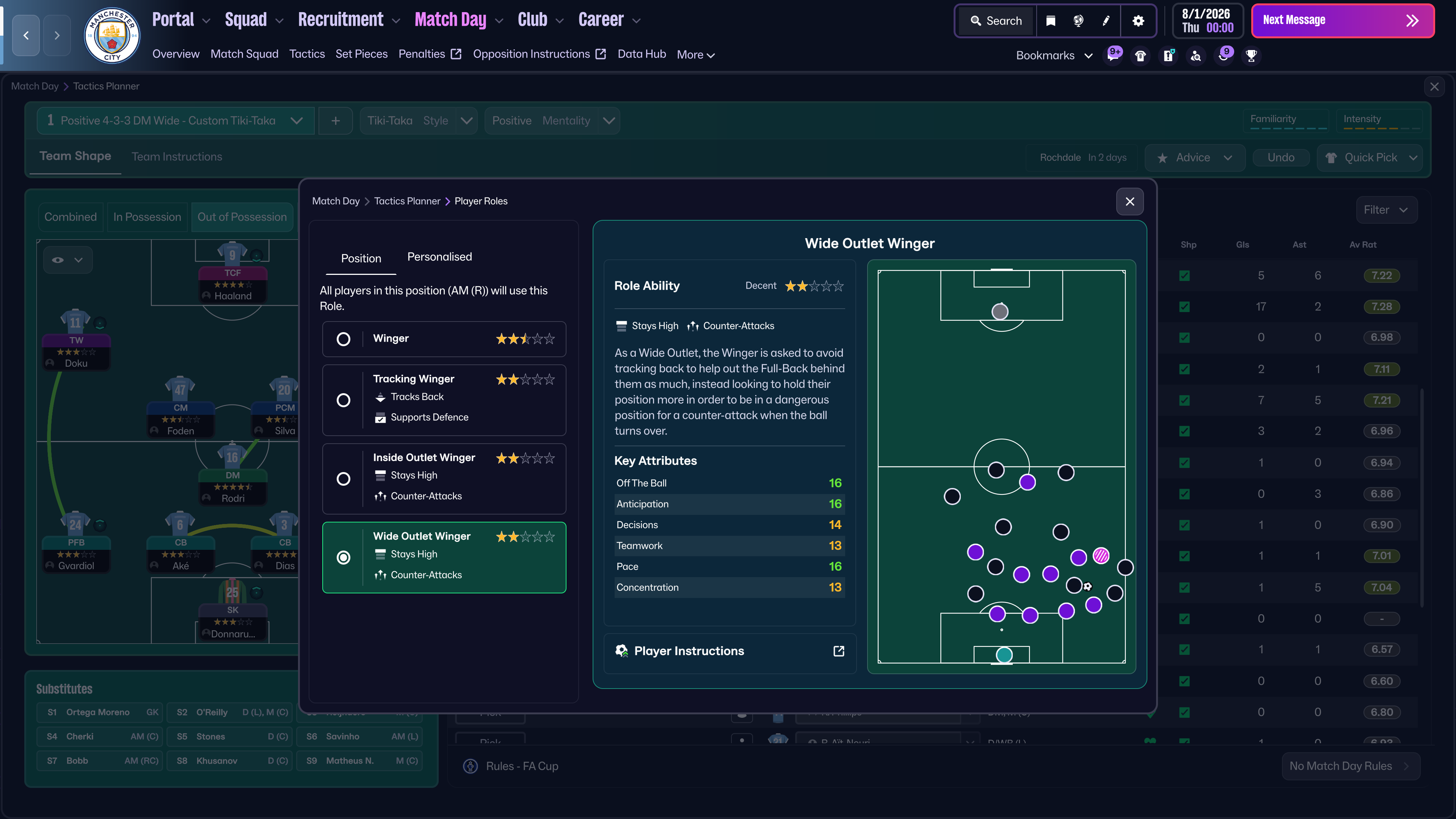
The secret isn’t just the press; it’s what comes after. By preloading your team’s offensive intent into every defensive phase, you’re not waiting to attack, you’re preparing to while you defend.
While there are some occasions when putting everyone behind the ball makes sense, doing it all the time stops your counter-attacks before they’ve started. Leaving two or three players high gives you options and it forces the opposition to make decisions. They can’t commit everyone forward, because they now have to track players, forcing decisions such as a full-back holding position after passing or a centre-back choosing not to step into midfield.
Some of the best managers in the world see effective Rest Attacks as a way to stay ahead. Let’s say your opponent builds up with full-backs high and wide. You deliberately allow space behind them, keeping your winger and striker positioned just far enough apart to look harmless. Then, once you win the ball, you don’t even need a genius through ball. All it takes is a runner, preferably one who recognises the right time and space. One vertical pass later, and your clean through on goal.
In FM26, you should be thinking about your Rest Attack when you set up your first tactic.
Regardless of whether you play a Low Block, Mid Block or even High Press, think about how many players you want keep forward and set them to act as outlets. In terms of your Tactical Instructions, you should increase your tempo to Higher, add Counter-Pressing and include Pass into Space.
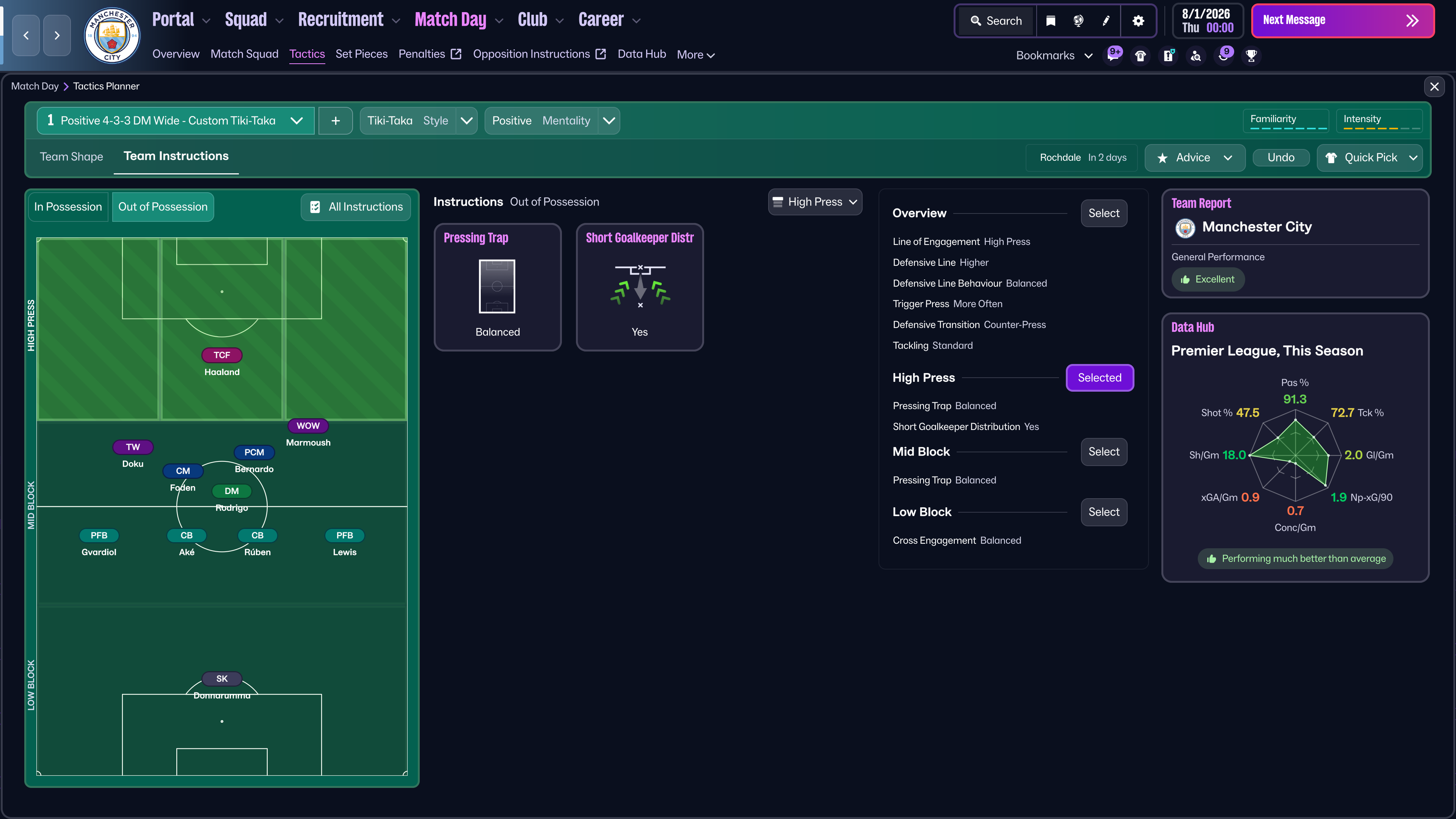
Rest Attack isn’t an exact science. If you leave too many players forward or isolated, you are left with a team split in two and no real outlets after all. If you leave too few, you’ve got no out ball for counters. It’s a balancing act but one that really pays off when you get to see the brilliance of a perfect transition goal.
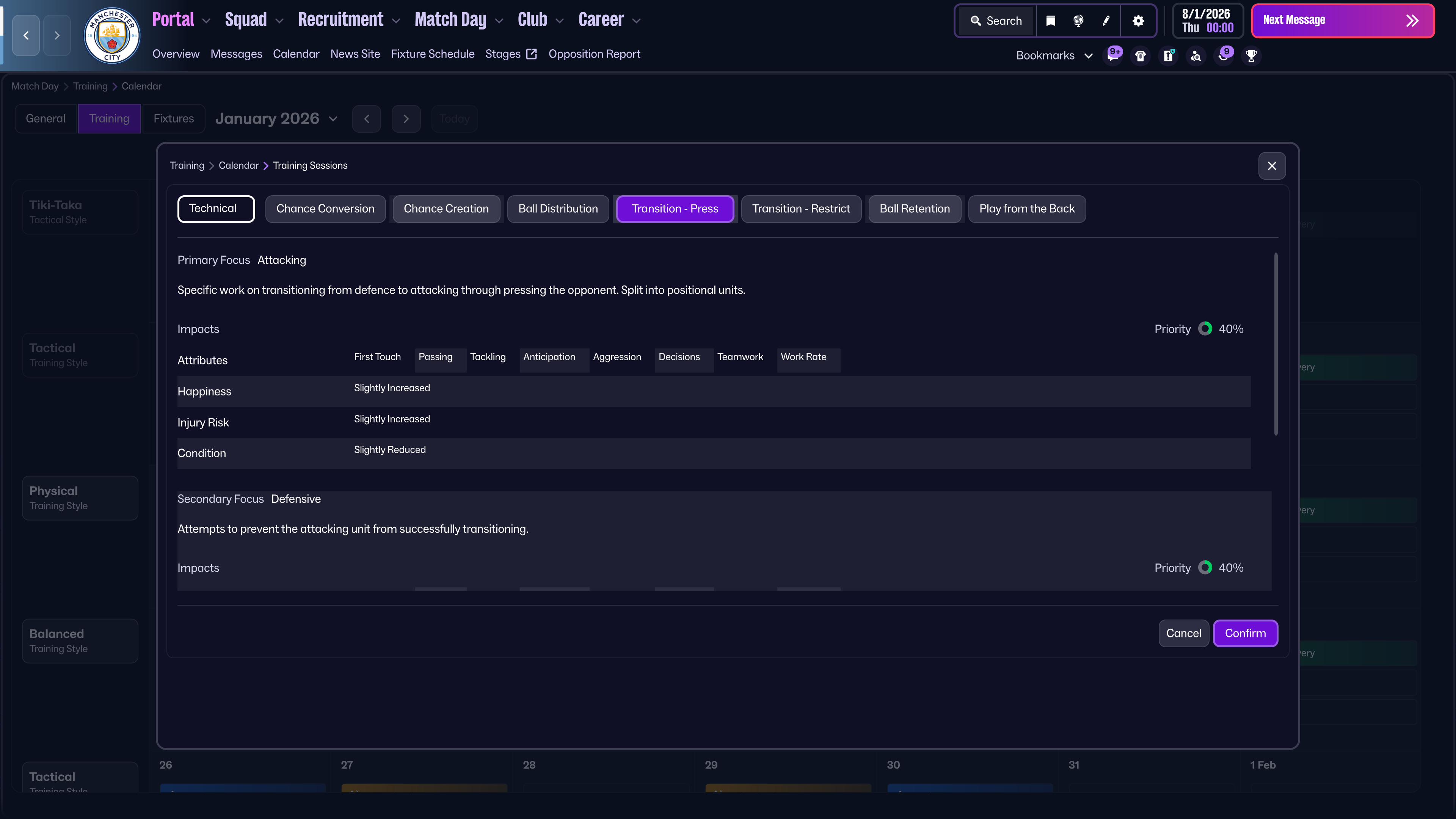
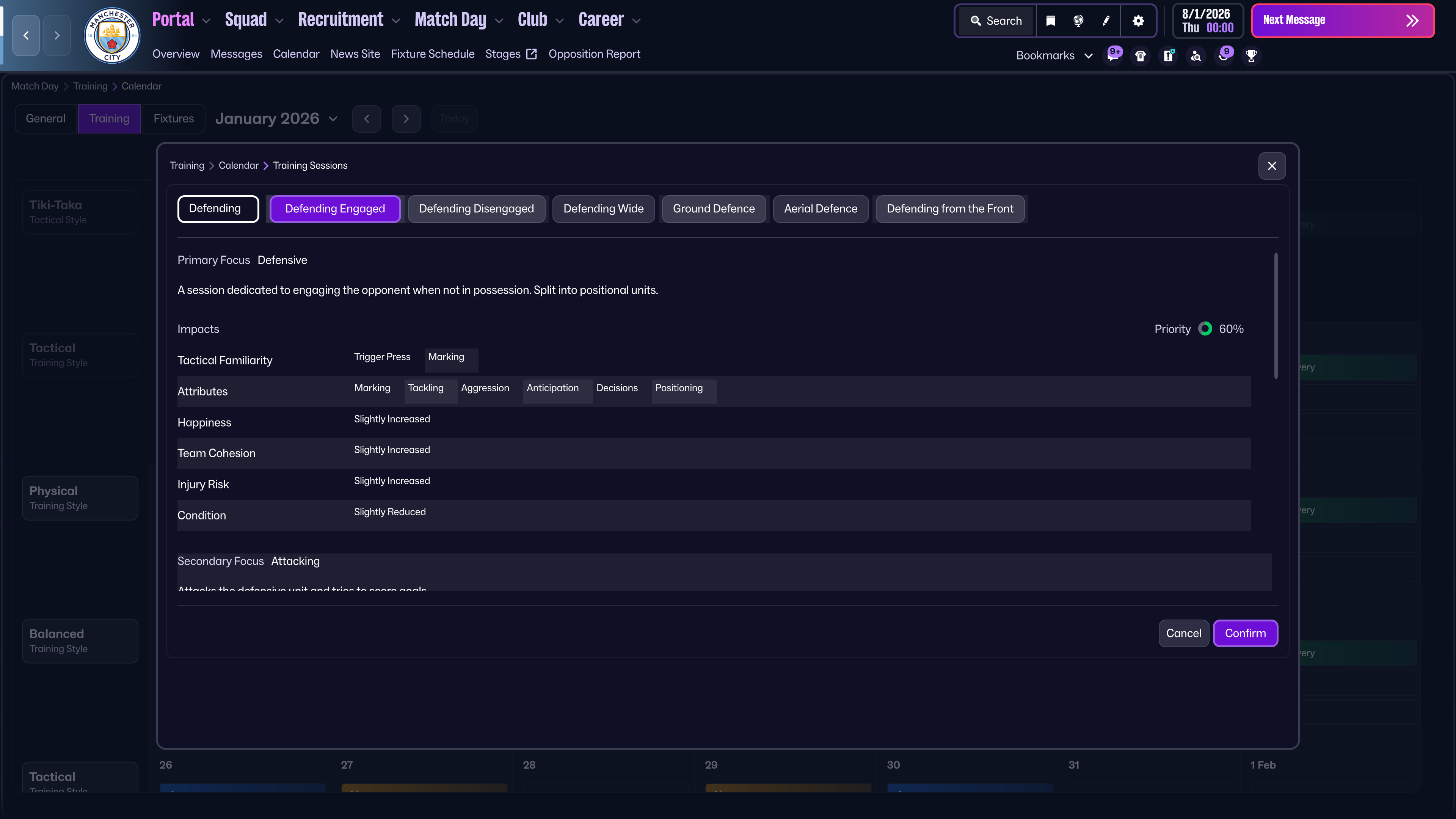
To assist you, FM26’s training modules allow you to focus on certain elements of your Rest Attack. For example, by adding Technical – Transition Press and Defending – Defending Engaged into your schedules, you’re getting your players to think earlier and make smarter decisions in those crucial transition moments.
Rest Attack reflects football’s evolution, where every manager is thinking about fine margins and how they can be first in every moment. FM26 captures that instinct with the Dual Formations, Dual Roles and, at last, properly implemented, Rest Attack.
Unlock early access to FM feature drops, news and reveals before anybody else. Plus, behind-the-scenes insights and incredible members-only giveaways.
Sign for FMFCAlready a member?

Don't Miss a Moment
Be the first to know what's next by following us across social media @FootballManager. Same handle, every platform.