Setting some general principles
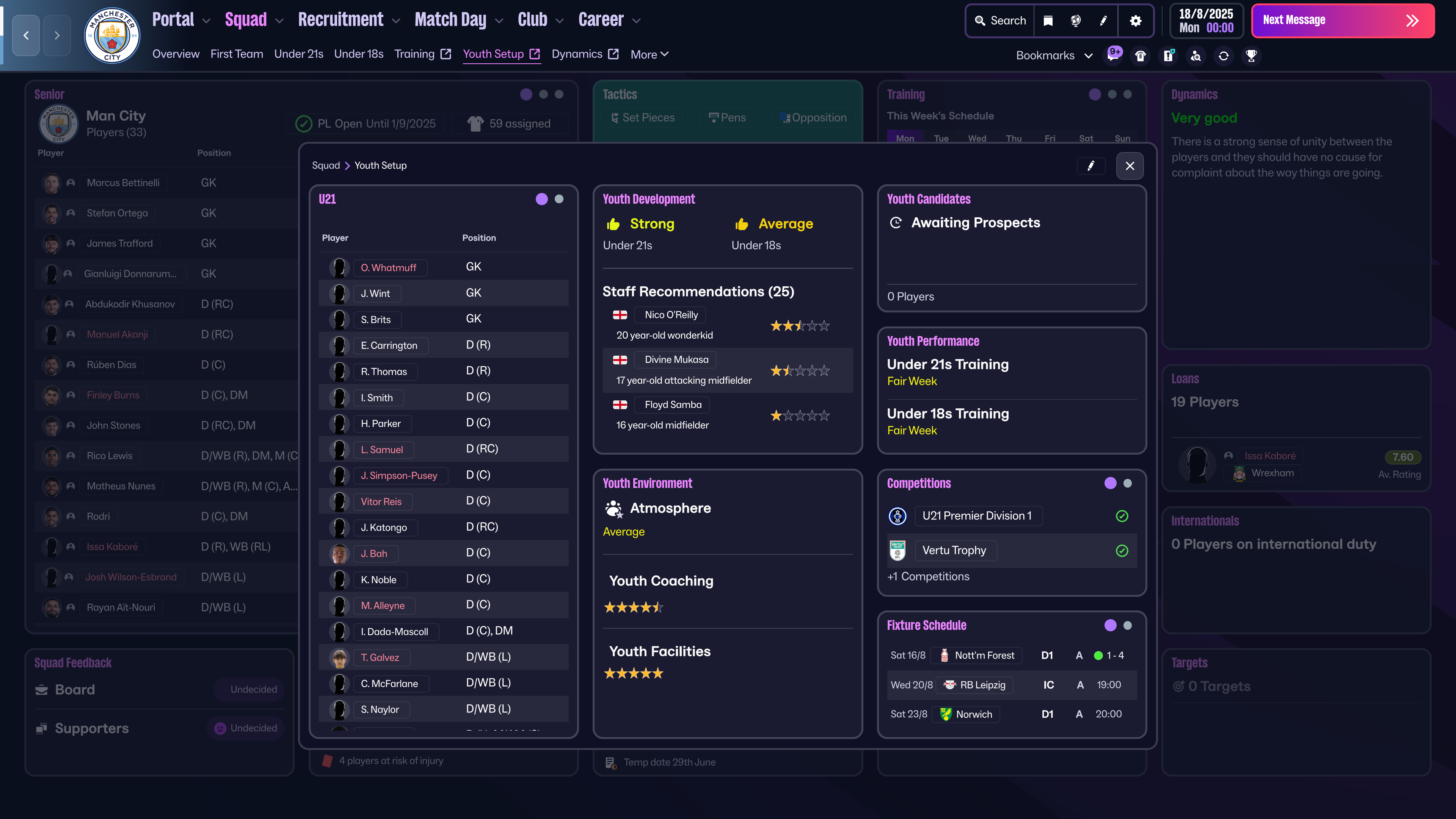
How you approach youth development will vary based on the club you’re managing, the league you’re in and how good the team are for the level. Every stage of a club’s evolution demands something slightly different from your youth system.
For example, if you’re managing in the lower leagues, you’ll often look to your youth team to provide depth for your first-team squad. Physical attributes matter more here — they’ll need strength, stamina and pace so they can meet the demands of lower league football and the volume of games they'll be playing.
It’s important to set yourself some general principles for developing your youngsters. That means thinking about whether you focus on physical or technical ability, what percentage of minutes you want your youth prospects to play, which cups/league games they'll have opportunities in and how you make decisions on who gets loans and permanent moves.
Technical and Physical Development
Player development happens in stages. Game time and general training will lead to most players evolving their Physical and Technical Attributes, with Mental Attributes typically improving more as they get older.
From this writer’s experience, your decisions on whether to prioritise technical or physical development should be based on their age, position and level of experience.
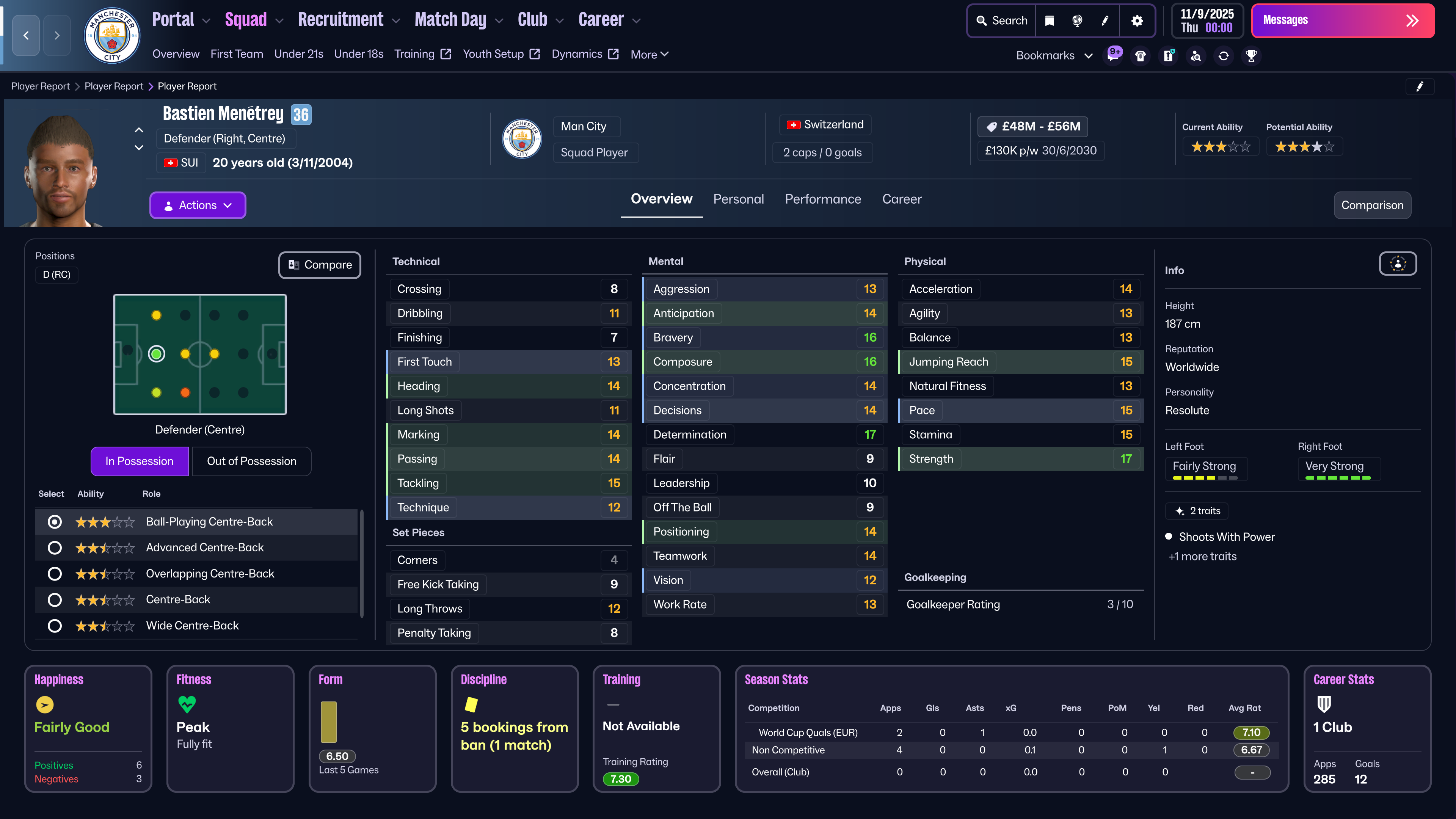
Generally speaking, when a player is between the ages of 15 and 17, you should prioritise their physical development. This can be done with an individual focus on their Physical Attributes and work in their position – so defender, midfielder or attacker – rather than a specific role.
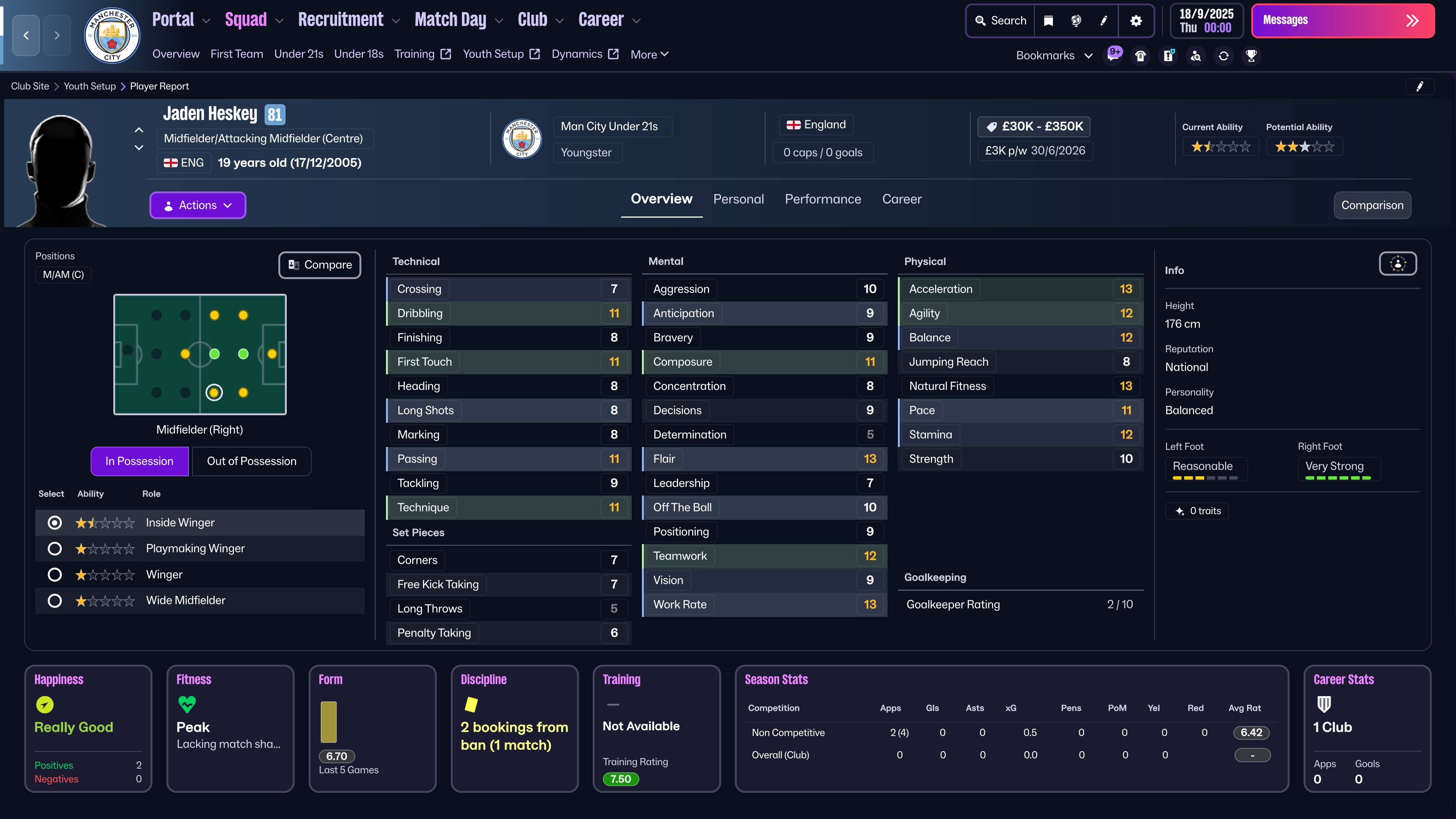
Then, unless they’re an obvious superstar, the ages of 18 to 21 are when you should focus on rounding out some of their technical deficiencies and priming them for their role in their squad. Training should evolve to Technical Attribute-focused at this stage with a preferred role assigned based on how their profile is shaping up and where you want them to fit in. It’s also at this stage that you should consider loan moves at an appropriate level.
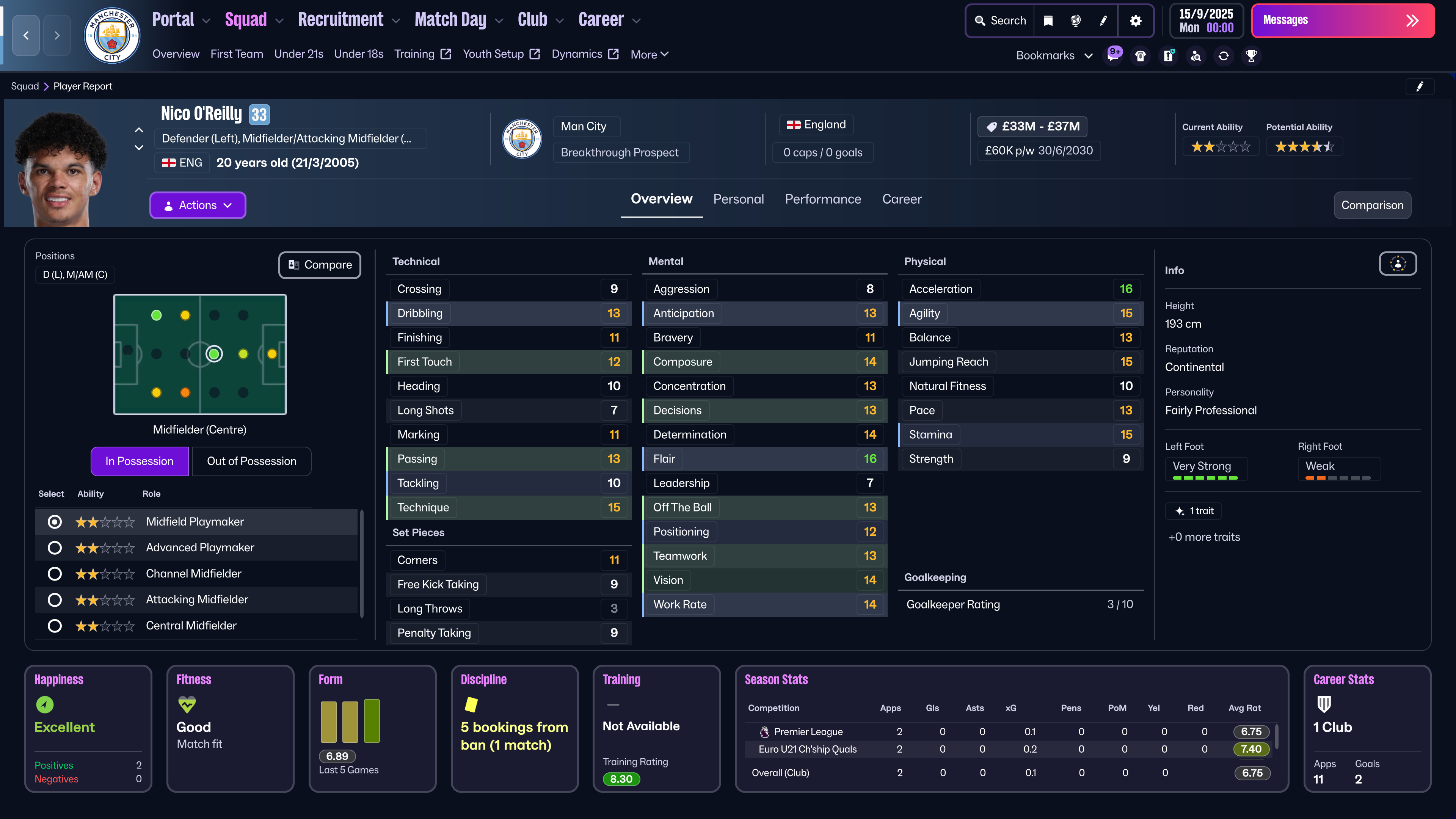
From 21 onwards, the player should be pushing for a first-team place or be a candidate for you to sell in the transfer market. In terms of their training at this point, you should alternate your focuses between Mental and Technical Attributes and also begin to think about incorporating Traits that you want them to adopt in their game.
Youth Training in FM26
To set up individual focuses on FM26, first head to Squad and Youth Setup, then pick the youth player you want to set up training for. You’ll find the training tab at the bottom of their player profile. This will take you into the familiar individual training screen and from there, you can set up not only this individual player's training, but also the rest of the youth squad.
This year, individual training looks a little different. Because there are in and out of possession roles, you can set up focuses for both phases of play, as well as an additional focus.
In the example below, I've got a player who I want to play as a Defensive Midfielder in possession, but a Full-Back out of possession:
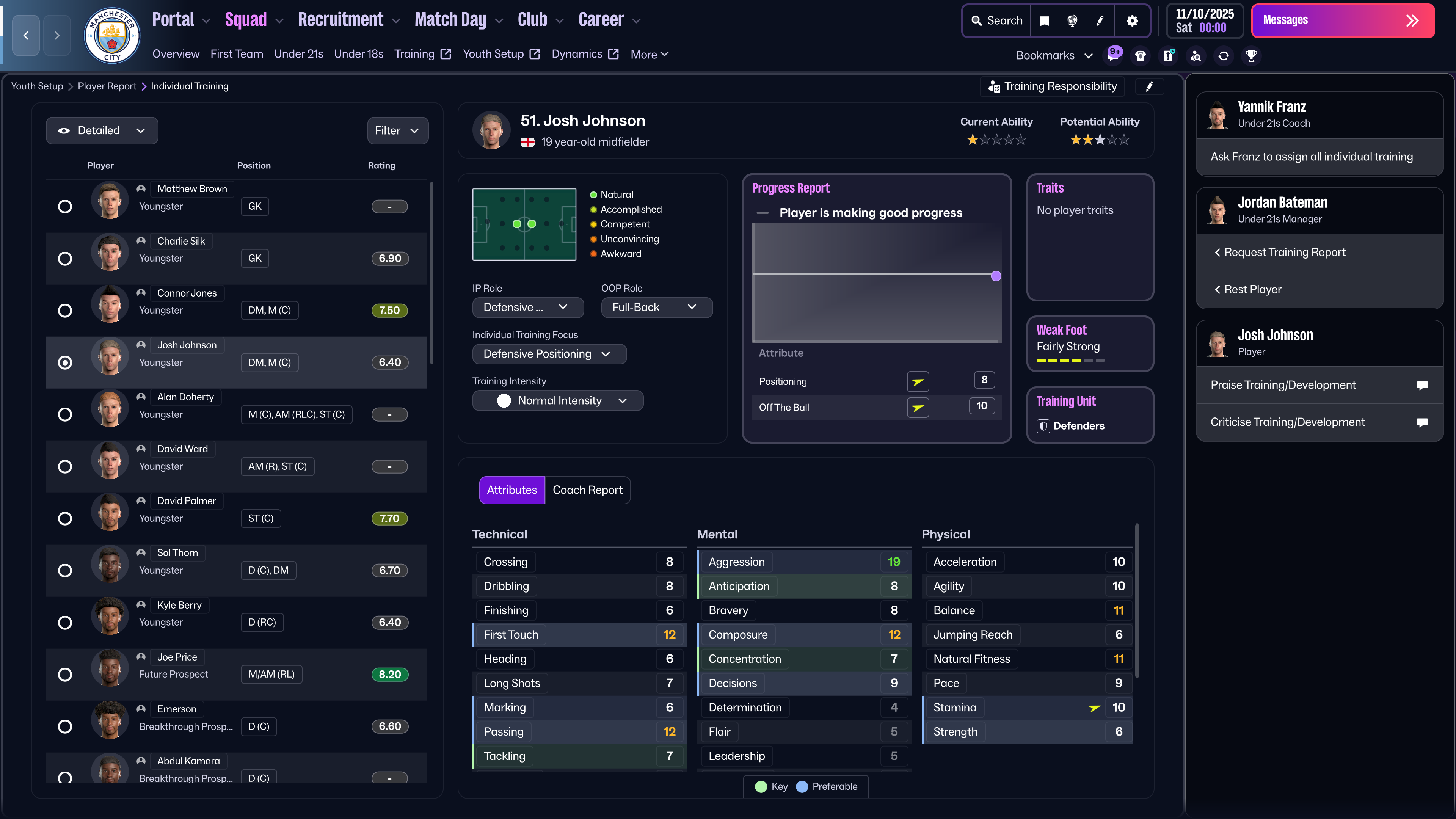
You will see that from this one screen, you can also swap the players' training units, see their progress, and tweak their individual focuses. This player is under 18, so the focus should be more on physical development; the IP and OOP focuses will hit a lot of the key Technical Attributes he needs to develop, so working on Agility and Balance will bring more benefit than 'double training' the Technical Attributes.
Many youth players don’t develop their physical attributes evenly. Some stats climb quickly, others hardly move.
That’s why it’s worth checking their training plans every few months and tweaking their individual focuses. These small adjustments help keep their physical development balanced.
Building a Development Pipeline
Training your players is only one aspect of their development – you need to have a pipeline and plan in place for them to move from your Under-18s through to your first-team squad.
You can’t get a full scope of a player’s potential at Under-18 level, so at this stage it makes sense to keep a broad, deep squad as long as you’ve got the coaching staff to handle the workload. Give them focused individual training to work on their physical development and aspects of their general position (defence, midfield, attack). When they hit 18, take stock of how they've developed and what their potential next step is.
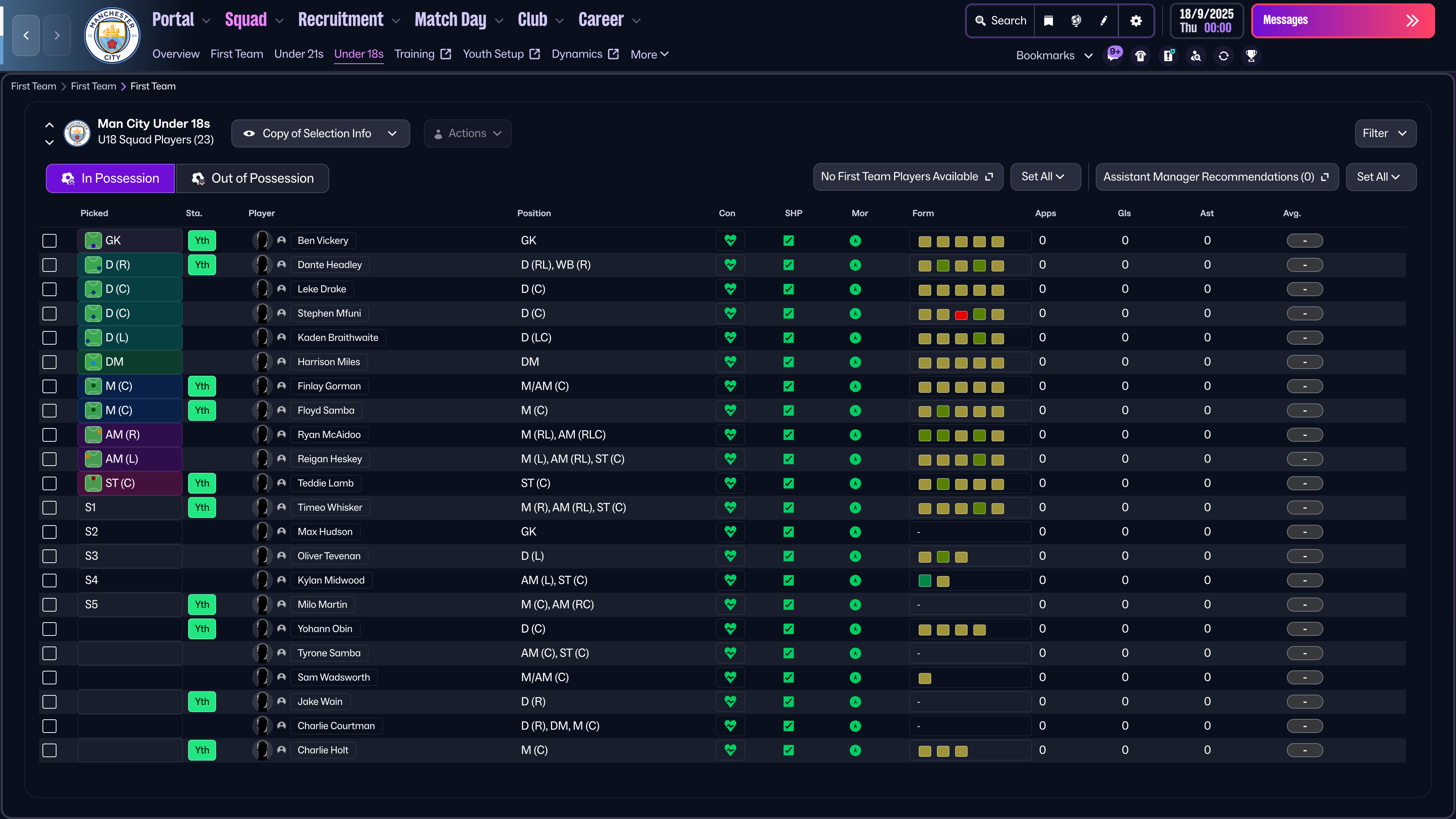
When a player reaches 18, gametime starts to become more important. If they're at an appropriate level, you can start to think about loaning them out to clubs playing in competitive leagues. The key is to find clubs and divisions where they'll receive quality game time and will perform well; minutes and rating are both important at this stage. There are a few ways to achieve this, including via affiliate clubs in different leagues. The new Opportunities feature introduced from TransferRoom is another great way to source a suitable move.
There will be youngsters that you struggle to find good moves for. For some, this will be because they're simply not good enough. For others, the challenge isn’t quality but timing; even good players can struggle to find a loan when clubs don’t need their position. In this situation, you need to ensure they’re getting regular minutes for your Under-21 side or put them in your first-team squad for rotation and cup minutes wherever possible. For most 'big' clubs, your youth teams will be playing semi-regularly, and especially continental youth tournaments still boast a good range of valuable minutes for youngsters.
The key here is not to have too many players left at the club, so that those in your Under-21s get a good share of minutes, with your most promising taking rotation minutes in your first team where possible.
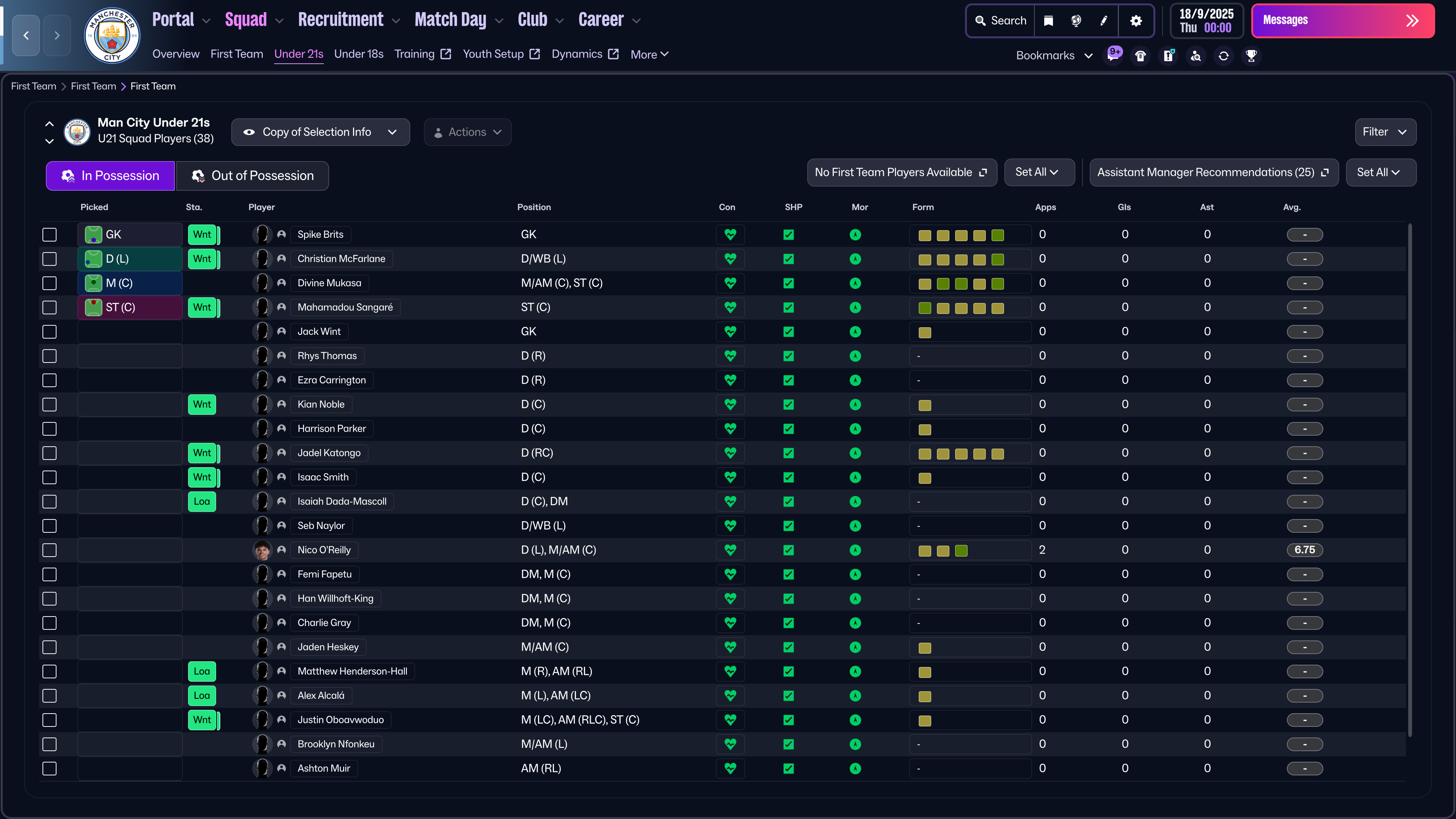
By the time a player reaches 21, you should have a relatively clear idea of whether they have a future at your club. The Squad Planner is a great resource for this - you can pull players into your squad planner from the youth system, to see where they fit in your squad in terms of ability and position. If you can give them minutes, then that is the perfect outcome, and they can start to form part of your first team squad.
However, at 21, a lot of youngsters hold a lot of value, often beyond their actual ability, so this can also be a good time to sell them on and reinvest that money in more youngsters to run through the pipeline.
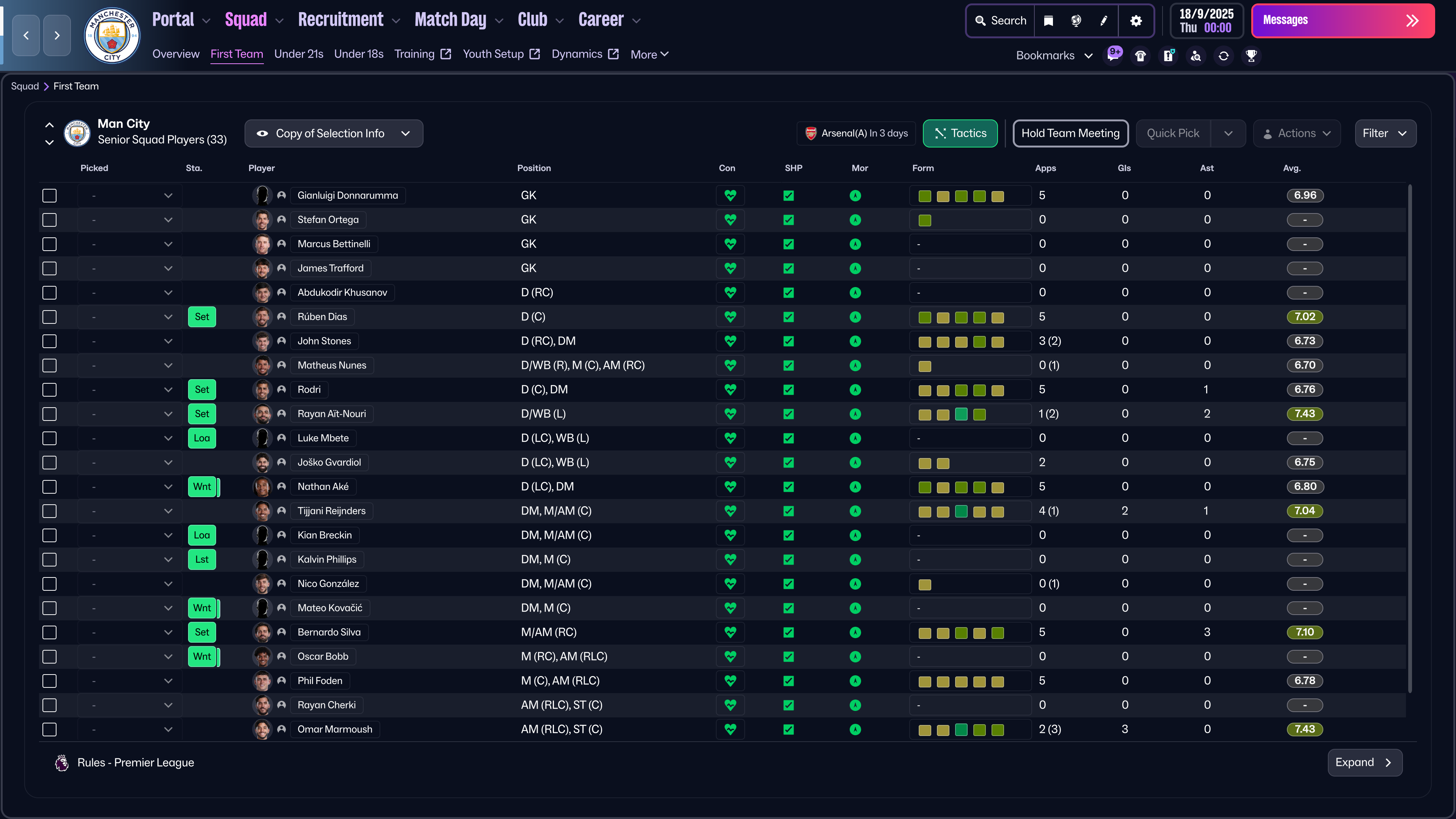
The most important thing is to try to develop a system which means you're never blocking or stagnating a player's progress during their time with your club. A well-run youth system is key to developing, sustaining and achieving success on Football Manager.













Don't Miss a Moment
Be the first to know what's next by following us across social media @FootballManager. Same handle, every platform.